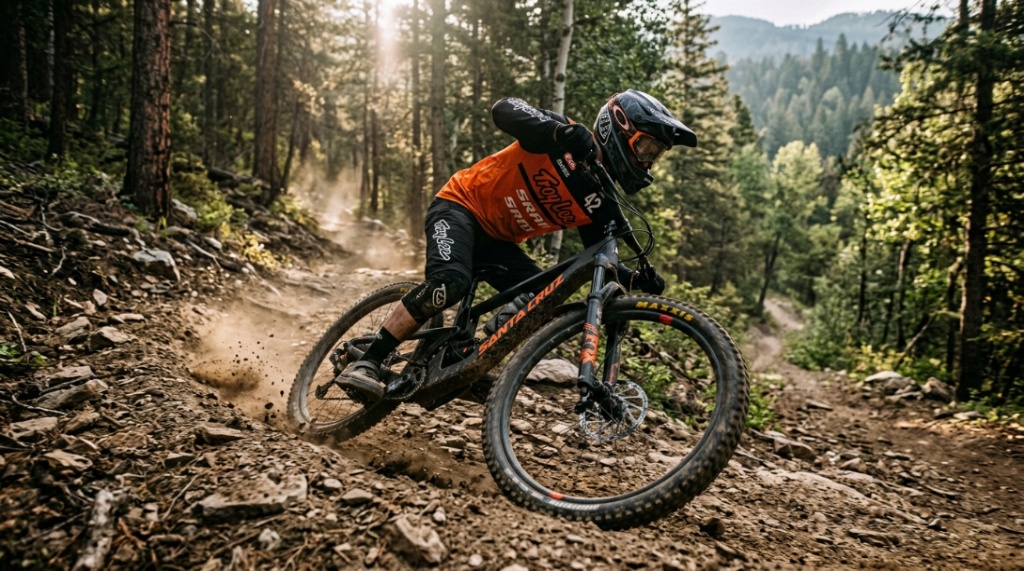
You’re bombing down a rocky descent, your tires bouncing off roots and stones, and then you feel it—your foot slips off the pedal. That split-second loss of control can send you over the bars or into a bush. Losing pedal traction on rough terrain isn’t just frustrating; it’s dangerous. Whether you are a weekend warrior or a seasoned enduro racer, understanding how to maximize mountain bike pedals is the difference between a confident ride and a painful bail. This guide will walk you through every variable that affects your connection to the bike, from shoe technology to suspension setup, so you can plant your feet and attack the trail.
Why Do My Feet Slip Off the Pedals on Rough Terrain?
Foot slippage happens when the vertical and lateral forces generated by rough terrain exceed the friction and mechanical lock between your shoe and the pedal. On rough trails, your bike vibrates and bounces, momentarily removing the weight on the pedals. When the pedal slams back up, your foot is no longer in the correct position. The primary causes are inadequate pin depth, worn shoe tread, incorrect pedal platform size, and poor body positioning. Without sufficient grip, your foot slides forward or sideways, breaking your connection to the bike.
The Physics of Pedal Grip
Think of grip as a battle between static friction and dynamic impact. A flat pedal relies on the interlocking of pedal pins with the rubber tread of your shoe. The deeper the pins and the softer the rubber compound, the better the mechanical lock. For clipless pedals, grip relies on a clean cleat and proper spring tension. On rough trails, the constant micro-bounces require a system that can re-engage instantly.
What Is the Best Type of Pedal for Rough Trail Riding?
For rough, technical, and unpredictable terrain, high-quality flat pedals with aggressive concave platforms and replaceable pins generally offer the best grip and confidence. While clipless pedals provide unparalleled connection for power transfer, flat pedals allow you to dab a foot instantly to avoid a crash, which is a significant advantage on extremely rough trails. The best pedal choice depends on your riding style and comfort with being clipped in.
| Feature | Flat Pedals (Platform) | Clipless Pedals |
|---|---|---|
| Grip on Bumpy Terrain | Excellent (mechanical lock) | Excellent (fixed connection) |
| Foot Exit Ease | Instant (pull foot off) | Requires twist (slower in a panic) |
| Best For | Technical descents, jumping, learning | Cross-country, endurance climbing |
| Risk of Injury | Lower (feet can bail) | Higher (can’t unclip in time) |
| Pin Maintenance | High (pins wear and bend) | Low (cleats wear more slowly) |
How Does Shoe Choice Affect Pedal Grip on Rough Trails?
Your shoes are arguably more important than your pedals when it comes to grip. A flat pedal shoe needs a sticky, high-friction rubber compound—like Stealth rubber from Five Ten or Vibram Megagrip—and a relatively flat, stiff sole profile. Shoes with deep, widely-spaced tread lugs designed for hiking actually reduce grip because the lugs prevent the pedal pins from contacting the flat rubber surface. For maximum grip on rough trails, choose a purpose-built mountain bike shoe with a low-profile tread pattern and a soft rubber compound that deforms around the pedal pins.
Key Shoe Features for Grip
- Rubber Compound: Softer rubber (60-62 Shore A) grips better than hard rubber.
- Sole Profile: Look for a mostly flat sole with minimal tread depth.
- Toe Box Stiffness: A stiff toe box prevents the shoe from folding over the pedal.
- Heel Retention: A snug heel cup keeps your foot from sliding inside the shoe.
Why Does Pedal Pin Length Matter for Grip?
Pin length directly dictates how deeply the pins penetrate your shoe sole. Longer pins (8mm to 10mm) provide a deeper bite and significantly more grip, but they can also chew up your shins and be more prone to bending. Shorter pins (4mm to 6mm) are safer and less aggressive but may not provide enough grip on extremely bumpy trails. The ideal pin length for rough trails is typically 8mm, as it offers a strong bite without being excessively dangerous. Many riders use a combination of 8mm pins in the front and rear of the pedal and 6mm pins in the center to create a “grip zone.”
How Can I Adjust My Riding Technique for Better Grip?
Your body controls the grip. On rough sections, you must consciously weight the pedals. Instead of sitting or hanging off the back, you should be in the “attack position” with your heels dropped. Dropping your heels shifts your center of gravity backward and presses the ball of your foot harder into the pedal platform. On rocky sections, unweight the saddle slightly to let your legs absorb bumps rather than your pedals. This prevents the bike from bouncing your feet off the pedals. Practice keeping your ankles flexible—rigid ankles reduce your ability to maintain contact force.
Technique Checklist for Rough Trains
- Heels Down: Actively push your heels toward the ground.
- Soft Knees: Use your legs as suspension to keep the pedals stable.
- Look Ahead: Scan for the smoothest line; don’t fixate on rocks.
- Pump and Weight: Push down into the pedals as you go over a root to pre-load the suspension.
Which Suspension Settings Help Maintain Pedal Grip?
Believe it or not, your suspension setup heavily influences pedal grip. If your suspension is too soft, the bike squats and wallows, causing the pedals to bounce erratically. If it’s too stiff, the bike skitters across rocks instead of absorbing them, transmitting all that shock directly to your feet. For maximum grip, you need a balanced setup with enough low-speed compression to prevent pedal bob, but enough high-speed rebound damping to keep the tire tracking the ground. A balanced suspension keeps the pedal platform more stable relative to the ground.
How Do I Choose the Right Pedal Pins for My Riding Style?
Pedal pins come in standard steel, titanium, and hardened steel varieties. For rough trail riding, hardened steel pins are the best choice. They resist bending and wear much longer than standard steel pins. Titanium pins are lighter but can shear off on hard impacts. If you ride in wet or muddy conditions, look for pins with a sharp, threaded profile (often called “grub screws”) rather than smooth dome pins. The sharp edges cut through mud and bite into wet shoes. Replace your pins when they become rounded or bent, as worn pins dramatically reduce grip.
Can Proper Pedal Maintenance Fix Slipping Feet?
Absolutely. The most common cause of sudden grip loss is neglected pedals. Over time, pin threads clog with dirt and corrosion, and the pins themselves get rounded off. If your pedals have been through a muddy season, remove the pins, soak them in degreaser, scrub the threads, and reinstall them with a drop of threadlocker (Loctite). Worn-out bearings that cause pedal wobble also reduce grip because the platform is no longer stable under load. A solid, firm pedal platform is the foundation of grip. A $10 set of new pins can often transform a slipping pedal back into a sticky platform.
Where Should I Position My Feet on the Pedal for Maximum Grip?
Position your foot so the ball of your foot is directly over the pedal axle. This gives you maximum leverage and control. However, on very rough descents, sliding your foot slightly rearward on the pedal (so the arch is over the axle) gives you a more stable, less twitchy platform. This position allows you to drop your heels even lower and brace against the pedals without feeling like you are going to be thrown over the bars. Experiment with foot placement: too far forward and you are unstable; too far back and you lose pedaling efficiency. Find the “sweet spot” on each trail section.
While adjusting your tire pressure and perfecting your body weight distribution will instantly transform your traction, your bike’s underlying geometry also plays a massive role. If you are just starting out and find your current setup slipping constantly, it might be time for a hardware upgrade. Check out our comprehensive breakdown of the Best Entry-Level Mountain Bike This Year to find a frame designed to handle technical terrain with confidence.
Is It Better to Use Clipless or Flat Pedals for Grip on Rough Trails?
There is no single “better” option—it comes down to risk tolerance and priority. Clipless pedals offer 100% mechanical grip; you are never going to bounce off them. However, when you crash, you are attached to the bike, which can lead to leg injuries. Flat pedals offer 90% grip with the ability to instantly put a foot down. For beginners or riders tackling extremely steep, loose rock gardens, flat pedals are often safer and more confidence-inspiring. For enduro racers who prioritize speed and pedal efficiency on punchy climbs, clipless pedals are the standard. Test both and see which allows you to ride faster without fear.
To explore the latest innovations in platform grip, check out this review of high-performance mountain bike pedals that feature adjustable pins and a concave design specifically engineered for aggressive trail riding.
What Is the Most Important Upgrade for Immediate Grip Improvement?
If you can only make one change today, upgrade your pedal pins to 8mm hardened steel pins and ensure your flat pedal shoes have a soft rubber sole. This single upgrade costs less than $15 and will transform how your foot connects to the pedal. If you are using clipless pedals, the most impactful upgrade is cleaning your cleats and replacing worn cleats. A dirty or worn cleat will allow your foot to rock side-to-side, leading to unexpected unclipping and loss of grip.
Frequently Asked Questions
How often should I replace my pedal pins?
Replace pedal pins when the points become visibly rounded or when you notice your feet sliding on the pedals during hard cornering. For frequent riders, this is usually every 3-6 months, depending on terrain and dirt conditions.
Do wider pedals always mean better grip?
Wider pedals offer a larger platform for stability, but width alone does not guarantee grip. A pedal that is too wide can hang up on rocks. A pedal that is too narrow may fold the shoe over the edge. Look for a pedal width that matches the width of your shoe sole (usually 100mm-115mm).
Can I use skate shoes for mountain biking?
Skate shoes have a flat sole but usually have a very soft, flexible midsole that lacks support for pedaling. They work in a pinch but bend excessively over the pedal edges, reducing control and causing foot fatigue on long rough trails.
Why do my feet slip in wet conditions?
Water acts as a lubricant between your shoe sole and the pedal pins. Additionally, wet shoes are softer and can deform improperly. To combat this, use pedals with more aggressive (sharper) pins and shoes with a sticky rubber compound that performs well when wet, like Stealth S1 or Vibram Wet Grip.
Should I use grip tape on my pedals?
Grip tape is not recommended for mountain bike pedals. It wears out quickly, traps mud, and does not provide the mechanical lock of pins. It is a temporary fix that often fails on the trail when you need it most. Stick to metal pins.
Does tire pressure affect pedal grip?
Indirectly, yes. Lower tire pressure improves traction, which keeps the bike more stable over roots and rocks. A stable bike means less bike-buck motion, which helps your feet stay planted on the pedals. Proper tire pressure is a critical part of the grip equation.
Can I add more pins to my existing pedals?
Only if your pedal platform has threaded holes for extra pins. Most pedals come with a fixed number of holes. Do not drill into pedals, as this compromises their structural integrity. If you need more pins, buy a pedal designed with a more aggressive pin pattern.
Conclusion
Getting better grip on rough trails isn’t about buying the most expensive gear—it’s about understanding the integrated system of pedals, shoes, suspension, and technique. Start by checking your pedal pins and shoe soles, then focus on your body position and suspension setup. The difference between a sketchy ride and a confident one often comes down to a few millimeters of pin depth or a subtle shift of your heel position. Experiment with the adjustments covered here, and don’t be afraid to try a different pedal platform if your current setup isn’t working. Your feet are your connection to the bike. Make that connection strong, and the trail will feel far more manageable.