
You have studied the wind, scouted the terrain, and dialed in your scope perfectly. You take a deep breath, settle the crosshairs, and squeeze the trigger. But the shot pulls left or sails high over the backstrap.The culprit more often than not is a misjudged distance. A laser rangefinder that prioritizes hunting rangefinder accuracy is the only way to eliminate the guesswork. Without precise ranging, even the most expensive rifle or bow setup is nothing more than a high-tech paperweight. This guide cuts through the marketing hype to show you exactly what specifications matter for real-world accuracy in the field.
What Does Hunting Rangefinder Accuracy Actually Mean?
Rangefinder accuracy is the margin of error between the distance the device reports and the true physical distance to the target. For hunting, a standard accuracy rating of plus or minus one yard at 100 yards is the baseline you should accept. Optics manufacturers measure this under controlled laboratory conditions using reflective targets. In the woods, however, accuracy degrades due to target angle, light conditions, and target reflectivity. A rangefinder that claims plus-or-minus half a yard costs more but delivers a tangible advantage when shooting at the extreme edge of your effective range. Anything beyond a one-yard variance introduces unacceptable risk for ethical, clean kills.
Why Does Laser Technology Choice Impact Accuracy in the Field?
The two main laser wavelengths used in hunting rangefinders are 905 nanometers and 1550 nanometers. Standard 905 nm lasers are common in budget and mid-range units and work well on reflective surfaces like road signs or white buildings. The problem is that 905 nm lasers struggle with low-contrast targets like a brown deer standing against a brown tree trunk in flat light. This causes the internal processor to average multiple readings, which reduces hunting rangefinder accuracy. The 1550 nm lasers, found in premium military-grade units, are eye-safe at higher power and penetrate fog, brush, and rain far better. They also produce a tighter beam divergence, which means you range the exact spot you are aiming at rather than clipping a branch six inches in front of the animal. If you hunt in heavy cover or during low-light dawn and dusk periods, stepping up to a 1550 nm unit is worth the investment.
How Do You Verify Rangefinder Accuracy Before Buying?
You cannot trust manufacturer claims alone. The only reliable method is to test the unit against a known, measured distance using a tape measure at 100, 200, and 500 yards. Start by setting up a high-contrast target such as a white sheet of cardboard or a dedicated calibration target. Measure the exact distance with a surveyors tape. Fire the rangefinder at least ten times at each distance and note the consistency of the readings. A high-accuracy unit will return the same number every single time. Variance of one yard or less at 200 yards is acceptable. Discrepancies of two yards or more indicate poor internal calibration or a cheap processor. Always perform this test before you take the rangefinder into the backcountry.
What to Look for in the Spec Sheet
- Accuracy rating: Look for ±0.5 yards at 100 yards for elite performance.
- Laser class: Class 1 is eye-safe. Avoid Class 3B for hunting use.
- Beam divergence: Measured in milliradians. Lower numbers mean tighter beams.
- Target acquisition time: Faster processors reduce motion blur errors.
Can a Budget Rangefinder Deliver Acceptable Accuracy for Hunting?
Yes, but with important caveats. Budget rangefinders under $200 often use older laser diodes and slower processors that struggle beyond 400 yards. They also lack advanced algorithms for filtering out background objects like leaves or grass. However, for a whitetail hunter who shoots at distances under 250 yards from a treestand, a budget unit can be perfectly adequate. The key is to test the unit thoroughly and to understand its limitations. Do not trust a budget rangefinder at long range without verifying it against a known distance. One reliable approach is to look at cross-comparison reviews that test budget units against premium standards. For a practical evaluation of several mid-range and budget options that still maintain solid hunting rangefinder accuracy, check detailed user tests that measure real-world performance rather than spec-sheet numbers.
Which Ranging Modes Improve Accuracy for Different Hunting Scenarios?
Different terrain and animals require different optical solutions. Scan mode is essential for open country hunting where you need to range multiple points quickly, such as across a canyon or over a field. The rangefinder updates the distance continuously as you pan, allowing you to find the exact yardage to a specific bush or rock near the animal. Bow mode is critical for archery hunters because it accounts for the steep angle between the treestand and the ground. Without angle compensation, a 30-yard shot from a 20-foot stand is actually a 28-yard horizontal shot, and that two-yard error is the difference between a perfect lung shot and a gut shot. First light priority mode is another high-value feature that prioritizes the return from the closest object, which prevents the laser from skipping past your target to a background hill. Always select a unit that offers at least scan mode and angle-compensated ranging if you hunt multiple terrains.
How Does Environmental Condition Affect Rangefinder Accuracy?
Temperature, humidity, and atmospheric pressure all bend or scatter the laser beam as it travels to the target. In cold weather below freezing, the battery chemistry changes and the laser diode output drops, which reduces the maximum range and the accuracy of the return signal. Dense fog causes the laser to reflect off water particles before it reaches the target, giving you a false short reading. Rain has a similar effect. High humidity above 80 percent reduces the effective range by 20 to 30 percent on even the best units. The solution is to use a rangefinder with an environmental compensation algorithm or a higher-powered laser that can punch through atmospheric interference. You should also store the unit in an inside pocket to keep the battery warm. No rangefinder is perfectly accurate in all conditions, but knowing how weather degrades performance helps you make better shot decisions in the moment.
Tips for Shooting in Bad Weather
- Range multiple times and take the average reading.
- Aim for a high-contrast area like a white patch of fur.
- Use a rangefinder with a built-in inclinometer for steep shots.
- Clean the lens frequently with a microfiber cloth to remove condensation.
Which Magnification and Lens Quality Matter for Accuracy?
Magnification between 6x and 8x is the sweet spot for hunting rangefinders. Lower magnification makes it hard to clearly identify the exact aiming point on a small target at long distances. Higher magnification above 10x introduces excessive hand-shake and makes it difficult to hold the laser dot steady. Fully multi-coated lenses are non-negotiable. Cheap single-coated or uncoated lenses scatter light and reduce the signal-to-noise ratio of the laser return, which directly degrades ranging accuracy. Look for dielectric-coated prisms in premium units, as these provide the brightest possible image and the most accurate laser return. A clear, bright viewfinder image is not just for comfort; it directly affects the precision of the ranging measurement you obtain.
How Important Is Beam Divergence for Shooting at Small Targets?
Beam divergence is arguably the most overlooked specification in rangefinder accuracy. Measured in milliradians, it describes how much the laser beam spreads out as it travels. A beam divergence of 0.5 milliradians spreads to about 20 inches at 1000 yards. A divergence of 2.0 milliradians spreads to nearly 80 inches at the same distance. If you are trying to range a pronghorn antelope at 800 yards, an 80-inch beam will hit not only the antelope but also the sagebrush behind it and the sky above it. The processor averages all those returns and gives you a false reading. For open-country and long-range hunting, look for a beam divergence of 0.3 milliradians or lower. For timber or brush hunting, a slightly wider beam is actually beneficial because it helps the laser find gaps in the cover. Match the divergence to your primary hunting environment for optimal performance.
How Does Target Reflectivity Change the Ranging Accuracy Number?
Rangefinder manufacturers rate their maximum range using a highly reflective target, such as a white painted wall or a road sign. When you range a deer, elk, or bear, the animal hide reflects only a fraction of that light. Dark animals like black bears or moose absorb most of the laser energy, drastically reducing the effective range and accuracy. A rangefinder that claims a 2000-yard range on reflective targets may only reach 400 yards reliably on a dark, non-reflective animal. This is why ethical hunters never push their rangefinder to the stated maximum range. Always apply a safety buffer of at least 30 percent. If a unit claims 1000 yards on reflective targets, assume it is good for about 600 yards on game. Testing the rangefinder against actual animal hides or dark fabric targets before the season is a wise practice.
Which Brand Holds Accuracy Best Over Years of Use?
Durability and long-term calibration stability vary significantly between brands. Leica and Swarovski produce the most consistently accurate units over time because they use military-grade laser diodes and sealed optical chambers that prevent dust and moisture from degrading the components. Sig Sauer has gained ground with its Applied Ballistics software integration, which maintains accuracy through advanced ranging algorithms that compensate for atmospheric variables. Vortex offers a robust lifetime warranty and good accuracy for the price point, though their lower-tier models drift slightly after heavy use in extreme temperatures. Bushnell remains a workhorse brand for hunters on a budget, but their accuracy consistency at long range (beyond 600 yards) is less reliable than the premium brands. For the highest long-term accuracy, choose a brand that uses an aluminum chassis and nitrogen-purged optics. Plastic housings warp over time and allow the laser emitter to shift, which destroys calibration.
Brand Comparison for Accuracy Retention
| Brand | Accuracy Rating | Long-Term Stability | Price Tier |
|---|---|---|---|
| Leica | ±0.5 yds | Excellent | Premium |
| Swarovski | ±0.5 yds | Excellent | Premium |
| Sig Sauer | ±0.5 yds | Very Good | Mid to High |
| Vortex | ±1.0 yds | Good | Mid |
| Bushnell | ±1.0 yds | Fair | Budget to Mid |
What Is the Best Way to Maintain Rangefinder Accuracy Over Time?
Calibration drift happens gradually, and you may not notice a one-yard error creep in over two years of hard use. The best maintenance practice is a monthly two-point calibration check using a known 100-yard and 300-yard reference. Store the unit in a hard case with a desiccant pack to remove internal moisture. Never leave the rangefinder in a hot vehicle dashboard because heat degrades the laser diode output power permanently. Clean the objective and ocular lenses only with a lens-specific solution and a microfibre cloth. Abrasive materials scratch the optical coatings and scatter the laser beam, reducing accuracy permanently. Replace batteries at the start of every season. A weak battery reduces laser power by up to 40 percent, which directly harms ranging precision even if the display still lights up.
Frequently Asked Questions
Can I use a golf rangefinder for hunting accuracy?
Golf rangefinders often lack the angle compensation and scanning modes needed for hunting. They also typically have slower processors and wider beam divergence. For close-range bow hunting under 100 yards, a golf rangefinder can work in a pinch, but rifle hunters should always use a dedicated hunting model.
What distance should my hunting rangefinder accurately range?
For bow hunting, you need reliable accuracy out to 80 yards. For rifle hunting in typical terrain, 600 yards of reliable accuracy is sufficient. Long-range shooters who hunt open country need 1000 yards of reliable accuracy on animal hide, not just reflective targets.
Does Bluetooth integration improve rangefinder accuracy?
Bluetooth itself does not improve the laser ranging measurement. Instead, it sends the distance data to a ballistics app that calculates holdover. The accuracy of the final shot solution depends on the rangefinder accuracy, not the wireless connection. Do not pay extra for Bluetooth unless you use a ballistics solver regularly.
How often should I replace my hunting rangefinder?
Most premium rangefinders maintain calibration for five to seven years with proper care. Budget units may lose accuracy after three years. Replace the unit when you notice inconsistent readings at known distances or when the maximum effective range drops noticeably from the original specifications.
Is a higher magnification always better for rangefinder accuracy?
No. Higher magnification magnifies hand shake and makes it harder to hold the laser dot on the target. Magnification above 8x is usually detrimental for field accuracy unless you use a tripod. Stick with 6x to 8x for the best balance of target identification and steady aiming.
Does fog mode actually improve ranging accuracy?
Fog mode reduces the sensitivity of the laser return to avoid false readings from water particles. It does improve accuracy in fog, but it also reduces the maximum range significantly. Only use fog mode when visibility is actually impaired. Leaving it on in clear conditions harms performance.
Can temperature affect the accuracy of my rangefinder reading?
Yes, extreme cold reduces battery voltage and laser diode output. This shortens the effective range and can cause the rangefinder to fail to return a reading at all. Keep the unit warm in an inside pocket when hunting in freezing conditions. Let it acclimate for five minutes before taking critical readings.
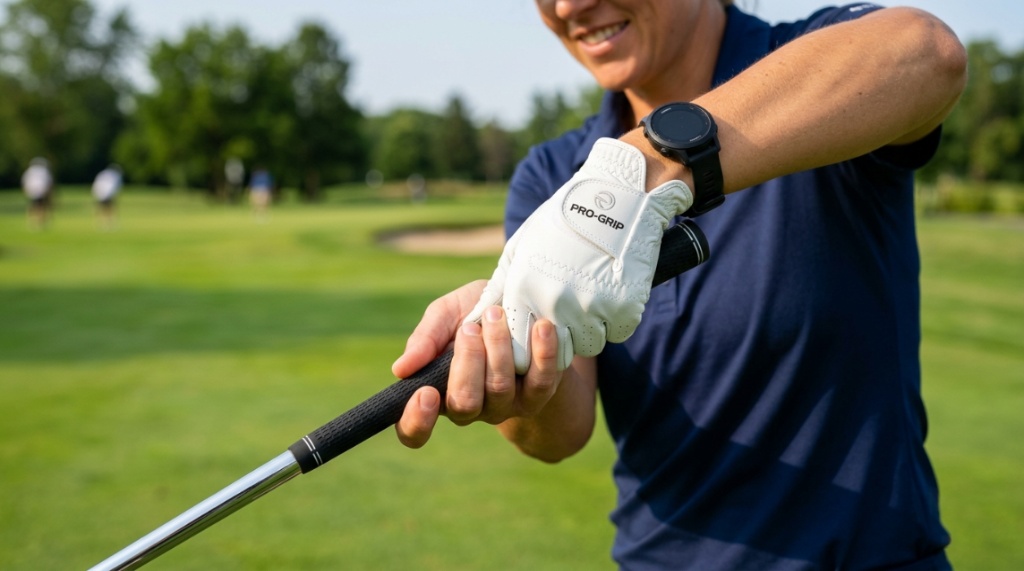
While mastering your swing mechanics is crucial, your connection to the club matters just as much. Ensuring you have the Right Golf Glove Size for Perfect Fit prevents the club from slipping and drastically improves your control.
Conclusion
Choosing a hunting rangefinder that delivers true accuracy requires moving beyond the marketing numbers and understanding how laser technology, beam divergence, and environmental conditions interact. Your hunting success and ethical harvest depend on knowing the exact distance to the animal. Start by verifying accuracy with a tape measure test before trusting any unit in the field. Match the rangefinder specifications to your specific hunting environment, whether that is tight timber, open prairie, or mountainous terrain. Invest in quality optics from reputable brands that maintain calibration over years of hard use. Take action today by testing your current rangefinder against a known distance. If it fails that test, apply what you have learned here to select a replacement that will never leave you guessing at the shot that matters most.