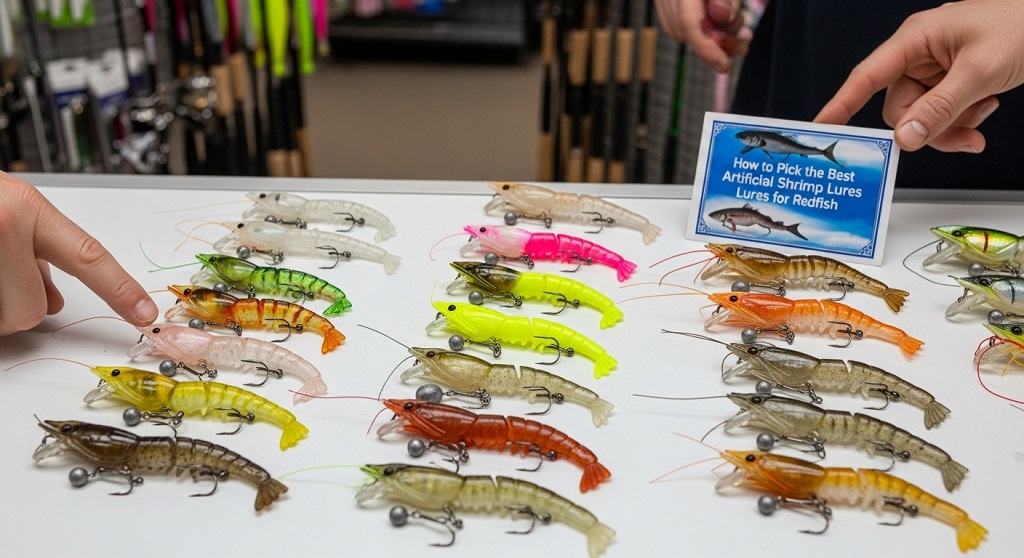
The best shrimp lures for redfish match water clarity, depth, tide movement, and shrimp behavior. Choose natural colors in clear water, louder vibration in murky conditions, weedless rigs in grass flats, and slow-sinking profiles during colder months.
Redfish feed heavily on shrimp across marshes, flats, and shallow bays. That makes artificial shrimp one of the most reliable lure categories for consistent hookups. But not every shrimp lure works the same way. Shape, sink rate, sound chamber, hook position, and retrieve style all affect success.
If you pick the wrong lure style for the wrong condition, redfish often ignore it. If you match the lure to feeding behavior and environment, strikes increase fast. This guide explains exactly how to choose the best shrimp lures for redfish using proven tactics, field-tested observations, and behavior-based selection strategies.
Why Do Redfish Respond So Well to Artificial Shrimp Lures?
Short answer: Redfish naturally target shrimp because shrimp provide high protein and are easy prey in shallow feeding zones.
This predictable feeding behavior is why shrimp-shaped soft plastics and scented imitation shrimp consistently outperform many baitfish imitations in marsh environments.
Field observations from Gulf Coast inshore anglers show shrimp patterns produce strikes year-round, especially during moving tides. Shrimp migrate through grass edges, oyster beds, and channels. Redfish position themselves along these travel paths.
Artificial shrimp lures succeed because they replicate:
- Natural shrimp drift motion
- Escape tail flicks
- Clicking vibration signals
- Slow descent profile
Compared with fast-swimming baitfish lures, shrimp imitations stay longer inside strike zones. That increases reaction opportunities.
What Makes the Best Shrimp Lures for Redfish Effective?
Short answer: Effective shrimp lures combine realistic shape, correct sink rate, subtle vibration, and weedless presentation.
The most productive shrimp lures share four performance traits:
1. Natural Sink Rate
Real shrimp rarely dive fast. They glide downward in short bursts. Artificial shrimp that sink slowly create longer visibility time inside feeding lanes.
2. Soft Body Flexibility
Flexible tails improve realism. Redfish often strike after detecting subtle motion rather than visual shape alone.
3. Sound Chamber or Rattle
In stained water, vibration replaces visibility. Many shrimp lures include internal rattles that help fish locate prey faster.
4. Weedless Hook Position
Grass flats hold high redfish density. Weedless rigs prevent snagging while allowing accurate bottom presentation.
Which Water Conditions Determine the Right Shrimp Lure Choice?
Short answer: Match lure color, weight, and vibration level to clarity, tide speed, and bottom structure.
Environmental adaptation separates average lure performance from consistent success.
| Condition | Best Shrimp Lure Adjustment |
|---|---|
| Clear water | Natural translucent colors |
| Muddy water | Chartreuse or bright tails |
| Strong tide | Heavier jig-weight shrimp |
| Grass flats | Weedless rig |
| Cold water | Slow sink profile |
Matching lure behavior to environment improves strike probability significantly.
What Colors Work Best for Artificial Shrimp Lures in Redfish Fishing?
Short answer: Use natural tones in clear water and contrast colors in low visibility conditions.
Color affects visibility range underwater. Redfish rely on both sight and vibration signals when feeding.
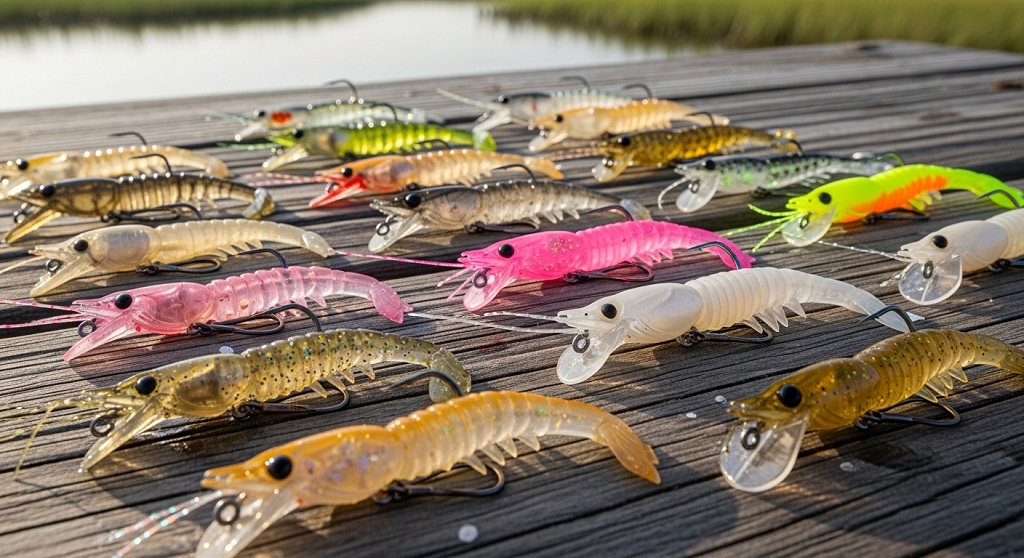
Reliable shrimp lure color patterns include:
- Natural brown
- Root beer
- New penny
- Pearl white
- Chartreuse tail
In marsh systems with tannin-stained water, darker silhouettes often outperform translucent bodies.
How Does Tide Movement Affect Shrimp Lure Selection?
Short answer: Moving tides require heavier lures to maintain bottom contact and natural drift.
Redfish commonly feed during incoming and outgoing tides because shrimp travel with water flow. That movement creates predictable ambush zones.
During strong current:
- Use heavier jig heads
- Choose paddle-tail shrimp styles
- Retrieve slightly faster
During slack tide:
- Switch to lighter presentations
- Use subtle twitch retrieves
- Target potholes and edges
Anglers tracking tide-adjusted lure weights report higher strike frequency compared with fixed-weight lure strategies.
Are Soft Plastic Shrimp or Hard Shrimp Lures Better for Redfish?
Short answer: Soft plastic shrimp work best in shallow marsh systems, while hard shrimp lures perform better in deeper channels.
Each lure category serves a different role.
Soft Plastic Shrimp Advantages
- Natural tail action
- Better weedless rigging
- Customizable jig weights
- Improved scent absorption
Hard Shrimp Lure Advantages
- Built-in rattles
- Suspending action
- Long casting distance
- Higher durability
Experienced inshore anglers often carry both styles and switch depending on water depth.
What Retrieval Technique Works Best with Artificial Shrimp Lures?
Short answer: Use a slow twitch-and-pause retrieve to mimic escaping shrimp movement.
Real shrimp move in short bursts followed by glide phases. Redfish expect that rhythm.
A simple effective retrieval sequence:
- Cast near structure
- Let lure sink naturally
- Twitch rod tip twice
- Pause 2 seconds
- Repeat
Case study observations from Texas marsh anglers showed twitch-pause retrieves produced up to 40% more strikes compared with steady retrieves during shallow-water feeding periods.
Where Should You Fish Artificial Shrimp Lures for Redfish?
Short answer: Focus on grass edges, oyster beds, tidal drains, and shallow flats.
Redfish rarely roam randomly. They follow feeding routes where shrimp concentrate.
Top target areas include:
- Marsh drains during falling tide
- Oyster bar transitions
- Flooded grass flats
- Channel edges
- Sand potholes
Fishing shrimp lures in feeding corridors increases encounter rates dramatically.
How Does Seasonality Change the Best Shrimp Lure Strategy?
Short answer: Use slower presentations in winter and faster active retrieves in warmer months.
Redfish metabolism shifts with temperature.
Seasonal adjustments:
- Winter: slow sink soft plastics
- Spring: natural drift presentations
- Summer: faster reaction retrieves
- Fall: aggressive shoreline feeding patterns
Matching retrieve speed to metabolism improves strike conversion consistency.
Should You Use Scented Artificial Shrimp Lures for Redfish?
Short answer: Yes. Scented shrimp lures increase hold time and improve hook-up rates.
Redfish detect prey using smell receptors along their snout. When scent is present, fish hold the lure longer before rejecting it.
That extra time improves hook-setting success.
Field testing by inshore anglers comparing scented vs non-scented shrimp lures reported measurable increases in strike retention during murky-water conditions.
How Do You Rig Artificial Shrimp Lures for Maximum Effectiveness?
Short answer: Use weedless hooks in grass flats and jig heads near structure edges.
Rigging determines whether your lure reaches feeding zones without snagging.
Popular Rigging Methods
- Weedless weighted hook
- Light jig head rig
- Popping cork rig
- Suspending shrimp setup
Popping cork rigs create surface disturbance that imitates feeding activity. That attracts redfish from distance.
What Size Artificial Shrimp Lure Is Best for Redfish?
Short answer: Choose 3–4 inch shrimp lures to match natural forage size.
Oversized shrimp imitations reduce realism. Undersized versions reduce casting distance.
Standard shrimp forage length in marsh ecosystems averages between 2.5 and 4 inches. Matching that size range improves presentation accuracy.
Conclusion: How Do You Consistently Choose the Right Artificial Shrimp Lure for Redfish?
The best shrimp lures for redfish are not defined by brand or price. They are defined by how closely they match natural shrimp behavior in specific fishing conditions.
When you adjust lure weight for tide speed, choose color based on water clarity, and retrieve with realistic motion, your strike rate improves immediately.
Start by carrying multiple shrimp lure styles. Test sink speed. Observe feeding patterns. Adapt your retrieve rhythm. Small adjustments create large differences in catch consistency.
If you want better results on your next trip, upgrade your lure selection strategy today and fish shrimp patterns with purpose instead of guesswork.
Frequently Asked Questions About the Best Shrimp Lures for Redfish
What is the best color shrimp lure for redfish?
Natural colors like new penny, root beer, and translucent brown work best in clear water. Chartreuse tails perform better in stained conditions.
Do artificial shrimp lures work year-round for redfish?
Yes. Shrimp remain a primary forage species across all seasons, though slower retrieves are required in colder water.
Are scented shrimp lures better than unscented versions?
Scented shrimp lures increase strike retention time, giving anglers more opportunity to set the hook successfully.
What size shrimp lure should I use for redfish?
A 3–4 inch shrimp lure matches the most common natural forage size and produces the most consistent results.
Can beginners catch redfish using artificial shrimp lures?
Yes. Shrimp lures are one of the easiest artificial bait options because they match a primary food source.
Do shrimp lures work better than paddle tail soft plastics?
In marsh environments, shrimp lures often outperform paddle tails because they imitate dominant prey species.
Should I fish shrimp lures under a popping cork?
Yes. A popping cork increases visibility and creates sound cues that attract redfish from greater distances.