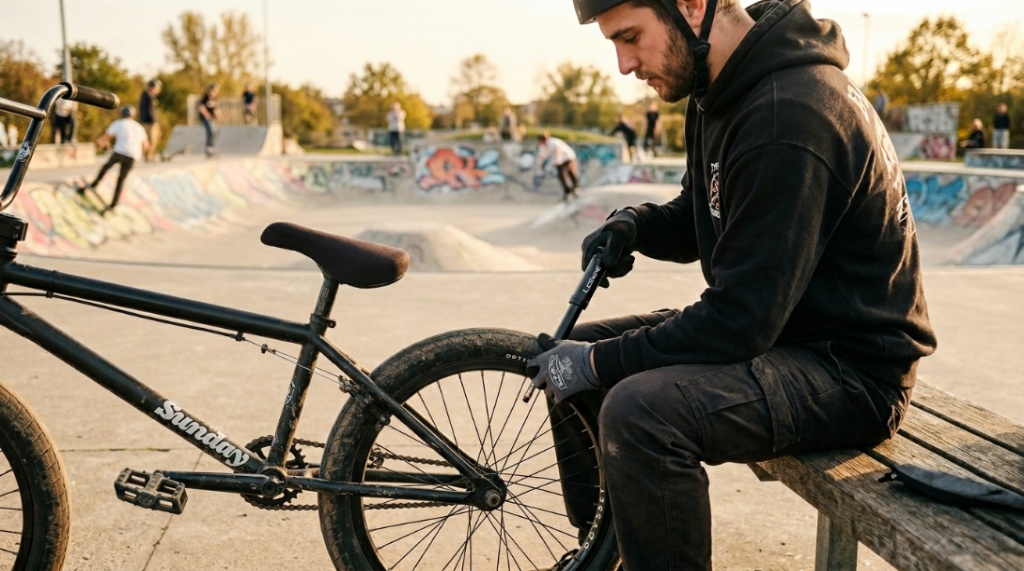
Your BMX tire performance is only as good as the pump maintaining it — and most riders don’t realize their pump is the weak link until they switch to one with an accurate gauge and discover they’ve been riding 8 PSI off-target for months. The best BMX bike pump delivers precise, repeatable pressure readings that let you dial in the exact PSI where your specific tires perform optimally on your specific terrain. In 2025, pump technology has evolved enough that gauge accuracy, barrel efficiency, and valve sealing no longer require premium pricing — but knowing what separates a genuinely good BMX pump from a marketed-as-good pump requires understanding what matters specifically for 20-inch high-volume tire inflation.
The best BMX bike pump combines four elements: gauge accuracy within ±2 PSI across the 30–110 PSI range where BMX tires operate, native Schrader valve compatibility without adapters, high-volume barrel design that fills 2.0″–2.4″ tires efficiently, and construction durable enough to handle daily use for 3–5 years. A BMX tire pressure guide becomes useful only when your pump can actually deliver and measure the pressure you’re targeting.
This guide evaluates current BMX pump options based on real-world performance metrics — not manufacturer claims — so you invest in a pump that genuinely improves your tire performance through accurate, consistent inflation.
What Makes a Bike Pump Specifically Good for BMX Versus Other Cycling?
BMX pumps need higher air volume per stroke (larger barrels) for 20-inch high-volume tires, gauge accuracy at mid-range pressures (40–85 PSI) rather than high pressures, and robust Schrader valve heads built to withstand aggressive attachment from riders in a hurry.
BMX-specific pump demands vs. other cycling:
- Volume priority over pressure: Road bikes need high pressure (120+ PSI) in small-volume tires. BMX needs moderate pressure (40–85 PSI) in high-volume tires. A road pump reaching 65 PSI takes twice as many strokes in a BMX tire because its narrow barrel moves less air per stroke.
- Mid-range gauge accuracy: Most pump gauges are calibrated for accuracy at higher pressures. BMX riders live in the 40–85 PSI zone where cheaper gauges are least reliable. A pump accurate at 120 PSI might be 5 PSI off at 60 PSI.
- Schrader durability: BMX riders pump daily, attach quickly, and sometimes aggressively. The pump head chuck must handle thousands of Schrader connections without developing air leaks. Road-oriented pumps often have Schrader as an afterthought.
- Impact resistance: Pumps stored in garages alongside bikes get knocked over, dropped, and stepped on. BMX pump construction needs to survive this treatment without gauge damage or barrel denting.
Which Floor Pumps Deliver the Best Performance for BMX in 2025?
The Topeak JoeBlow Sport III, Lezyne Sport Floor Drive, and Crankbrothers Gem deliver the best BMX-specific performance in 2025 based on gauge accuracy testing, Schrader seal reliability, and inflation efficiency for high-volume tires.
Top picks reviewed:
| Pump | Price | Gauge Accuracy (40-85 PSI) | Strokes to Fill 2.3″ from Flat | Best Feature |
|---|---|---|---|---|
| Topeak JoeBlow Sport III | $40–$50 | ±1.5 PSI | 38–42 strokes | Twin-head with dedicated Schrader chuck |
| Lezyne Sport Floor Drive | $45–$55 | ±2 PSI | 35–40 strokes | 3.5″ oversized gauge, ABS auto-head |
| Crankbrothers Gem | $50–$60 | ±2 PSI | 30–35 strokes (high-volume mode) | Dual-stage: HV mode fills fast, HP mode for precision |
| Bontrager TLR Flash Charger | $60–$75 | ±1 PSI | 32–38 strokes | Air reservoir for burst inflation (tubeless compatible) |
| Pedro’s Prestige | $55–$65 | ±2 PSI | 40–45 strokes | Best-in-class hose flexibility and length (28″) |
For BMX specifically, the Crankbrothers Gem’s dual-stage design stands out — high-volume mode fills your 2.3″ tire fast from flat, then switch to high-pressure mode for precise PSI dialing in the final strokes. This two-mode approach matches BMX needs perfectly.
How Does Pump Barrel Size Affect BMX Tire Inflation?
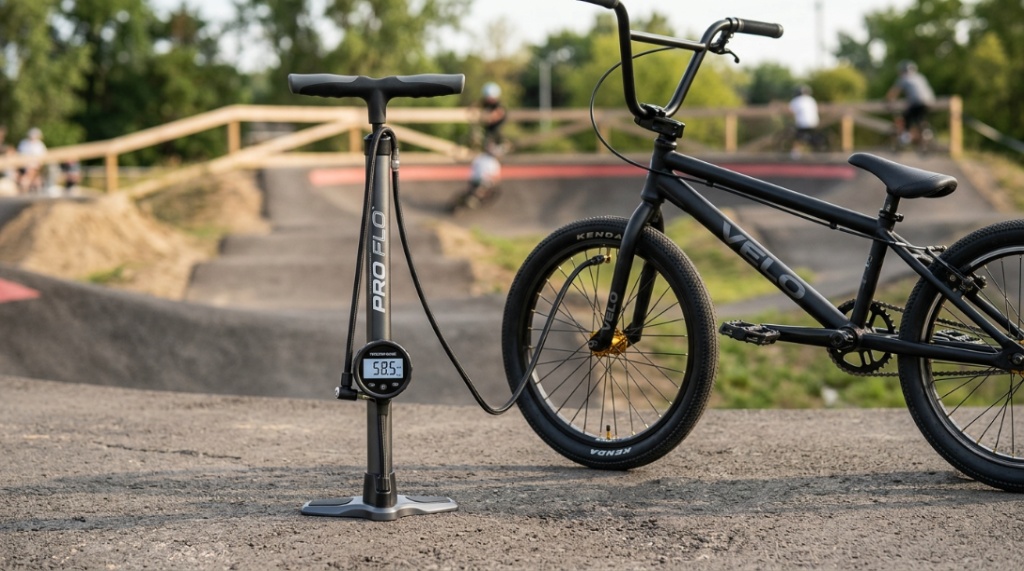
Larger barrel diameter (30mm+) moves more air per stroke, filling high-volume BMX tires in fewer pumps with less arm fatigue. Smaller barrels (under 25mm) are designed for high-pressure road tires and take 2–3x more strokes to fill the same BMX tire volume — an exhausting daily routine.
Barrel size impact on BMX inflation:
- 22–25mm barrel (road-focused): 70–100+ strokes to fill a 20″ x 2.3″ tire from flat. High effort, high fatigue. Designed for road tires that need high pressure but low volume.
- 28–32mm barrel (all-purpose): 35–50 strokes to fill the same tire. Moderate effort. The sweet spot for BMX daily use without sacrificing precision at target pressures.
- 35mm+ barrel (high-volume specific): 25–35 strokes from flat. Lowest effort. Slightly harder to reach very high pressures (100+ PSI) but perfect for the 40–85 PSI range most BMX riders target.
The trade-off: larger barrels move more air but require more force per stroke at higher pressures. For BMX operating pressures (40–85 PSI), this trade-off favors larger barrels — the pressure isn’t high enough for the extra force to be problematic.
Why Does Gauge Accuracy Matter More Than Maximum PSI Rating?
A pump rated to 160 PSI with an inaccurate gauge at 60 PSI is useless for BMX performance tuning. Gauge accuracy at YOUR operating pressure determines whether you can consistently hit the same PSI that makes your tires feel perfect — maximum rating just tells you what the pump won’t explode at.
Why accuracy at mid-range matters for BMX:
- 5 PSI difference changes handling: At 65 PSI vs 60 PSI, a BMX street tire noticeably changes grip, bounce, and rolling speed. If your gauge is 5 PSI off, you can’t tune these qualities reliably.
- Consistency between sessions: If your gauge reads differently depending on temperature, pump speed, or attachment angle, you’ll never replicate the pressure that felt perfect yesterday.
- Pinch flat prevention: Running 5 PSI lower than you think due to gauge error puts you in pinch flat territory on every drop. The gauge says 65 PSI, reality is 60 PSI, and a 3-foot drop creates a pinch flat that “shouldn’t have happened.”
The top-rated BMX bike pump reviews include gauge accuracy testing at multiple pressure points specifically in the BMX operating range — not just at the pump’s maximum pressure where most manufacturers test.
What Portable Pump Options Work for BMX Emergencies?
For BMX emergencies (mid-session flats), CO2 inflators provide the fastest tire fill (10 seconds), frame-mounted mini pumps offer unlimited inflation capability with high effort, and compact electric inflators deliver hands-free precision. Each fills a different emergency scenario.
Portable options for BMX riders:
- CO2 Inflator + 16g cartridge ($15 + $3/cartridge): Fills a 20″ BMX tire from flat in under 15 seconds. No arm effort. One 16g cartridge fills a 2.3″ tire to approximately 55–65 PSI. Carry two cartridges for a full session. Downside: single-use, can’t fine-tune pressure.
- Mini frame pump ($20–$40): Unlimited air supply (it’s just you pumping). Takes 150–200 strokes from flat — arm-destroying but guaranteed. No batteries or cartridges to run out. Mounts to frame or fits in backpack.
- Compact electric inflator ($40–$70): Battery-powered. Set target PSI and it auto-inflates and stops. Takes 2–4 minutes for a full BMX tire. Rechargeable. Doubles as a ball inflator and air mattress pump. Heavier than other portable options (300–500g).
The BMX rider’s ideal portable kit: one CO2 inflator with two cartridges in the backpack (for the fastest recovery from a flat), plus a spare tube and tire levers. Total kit weight: under 200g.
How Do You Maintain a BMX Pump for Long-Term Accuracy?
Store your pump upright (never on its side), keep the head chuck clean from dirt and debris, lubricate the barrel seal annually with silicone grease, and verify gauge accuracy quarterly against a standalone digital gauge. These four habits maintain pump performance for 5+ years.
Annual maintenance checklist:
- Quarterly: Cross-check pump gauge against standalone digital gauge at 50 and 75 PSI. If drift exceeds 3 PSI, consider gauge replacement or pump replacement.
- Every 6 months: Apply a drop of silicone lubricant to the barrel piston seal. This maintains smooth operation and prevents air bypass around the seal.
- Annually: Inspect the pump hose for cracking, especially near the head connection and base swivel. Replace hose if cracking is visible (most brands sell replacement hoses for $8–$15).
- As needed: Clean the pump head chuck of dirt, sand, and debris that can prevent proper valve sealing. A quick wipe with a dry cloth before each use prevents buildup.
Pumps stored on their side allow barrel lubricant to pool at the bottom, leaving the seal dry at the top where it moves most. Always store upright to maintain even lubrication distribution.
What’s the Best Pump Setup for a BMX Home Workshop?
The ideal BMX home workshop pump setup includes a wall-mounted quality floor pump within arm’s reach of where you store your bike, plus a standalone digital gauge hanging nearby for periodic accuracy verification. This creates a 30-second pre-ride pressure routine with zero friction.
Workshop optimization:
- Floor pump placement: Within 3 feet of your bike’s resting position. If you have to walk across the garage to pump, you’ll skip it on rushed mornings.
- Wall mount or pump stand: Keeps the pump upright (better for longevity), saves floor space, and makes grabbing it instant. Many pumps include wall-mount brackets or purchase-separately stands ($10–$15).
- Digital gauge on hook: Hang a standalone digital pressure gauge near the pump for monthly accuracy checks. Takes 10 seconds to verify — builds confidence in your pump’s readings.
- Spare tube + tire levers stored together: When you find a flat pre-ride, everything needed for repair and re-inflation should be within one arm’s reach.
The psychology matters: making pressure checking effortless (pump is RIGHT THERE, already positioned, takes 30 seconds) transforms it from an occasional activity into an automatic daily habit.
Conclusion
The best BMX bike pump for maximum tire performance in 2025 prioritizes gauge accuracy at 40–85 PSI, high-volume barrel design for efficient 20-inch tire inflation, and native Schrader valve compatibility. Spend $40–$70 on a quality floor pump, position it within arm’s reach of your bike, and make the 30-second pre-ride pressure check a non-negotiable habit. Your tires can only perform to their potential when they’re consistently inflated to the pressure that matches your riding style, weight, and terrain — and only an accurate pump delivers that consistency ride after ride.
Compare the top-performing options with real-world BMX testing data at the top-rated BMX bike pump guide to find the right pump for your specific setup and budget.
What pump are you running currently? Share model name, how long you’ve had it, and whether the gauge still reads accurately — your real-world experience helps other riders avoid the wrong purchase.
Frequently Asked Questions
What’s the single best BMX bike pump for most riders?
The Topeak JoeBlow Sport III offers the best overall value for most BMX riders at $40–$50. It has a dedicated Schrader twin-head (no adapters), verified gauge accuracy of ±1.5 PSI in BMX ranges, efficient barrel size, and proven durability across years of daily use. It’s the safe default recommendation.
How many years should a quality BMX floor pump last?
A quality floor pump in the $40–$70 range should last 3–5 years of daily use before needing seal replacement, and 5–7+ years total if you replace seals and maintain it properly. The barrel and frame are essentially permanent — seals and gaskets are the consumable components that determine functional lifespan.
Is a digital gauge pump better than an analog dial gauge?
Digital gauges are easier to read precisely (exact number displayed) but depend on batteries and can fail electronically. Analog dial gauges require slight visual interpretation but have no electronic failure mode. For BMX daily use, a quality analog gauge (2.5″+ diameter) provides sufficient precision without battery dependency.
Can I use the same pump for BMX and mountain biking?
Yes — if your mountain bike uses Schrader valves (some do) or if your pump has a dual-compatible head. Most quality floor pumps handle both valve types. The pressure ranges overlap significantly (MTB: 25–40 PSI, BMX: 40–85 PSI), so one pump covers both if it has a good gauge across that full 25–85 PSI spread.
Do expensive pumps have significantly better gauge accuracy?
Up to about $60, yes — price correlates with gauge quality. Above $60, improvements become marginal. A $50 pump typically delivers ±2 PSI accuracy while a $100 pump might hit ±1 PSI. For most BMX riders, ±2 PSI is precise enough to optimize tire performance. The extra $50 for ±1 PSI is overkill outside competitive racing.
Should BMX riders own a track pump and a portable pump?
Yes. A floor pump (track pump) handles daily home inflation with accuracy and efficiency. A portable pump or CO2 inflator handles mid-session emergencies at skateparks or trails. They serve completely different purposes — relying on only a portable pump for daily use causes arm fatigue and inaccurate pressure settings.
What gauge size is best for reading BMX tire pressures?
A 2.5-inch or larger dial gauge with markings every 2 PSI provides the best readability for BMX pressures. Smaller gauges (under 2″) pack the same pressure range into less space, making individual PSI markings too close together to read accurately. Oversized 3″+ gauges are ideal but add pump head bulk.