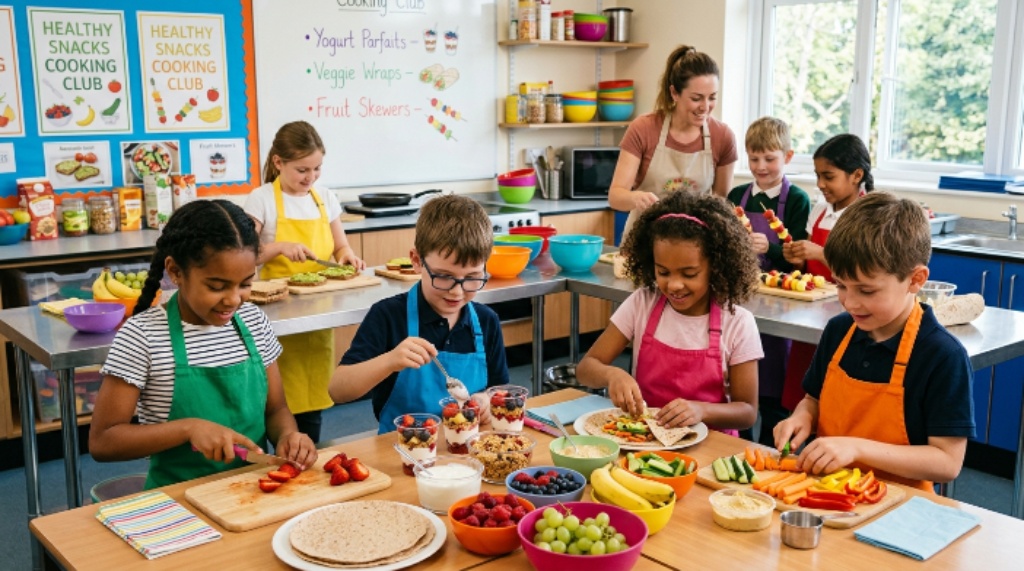
Cooking clubs give children practical life skills while making learning exciting after the school day ends. Research shows that hands on culinary programs improve cooking confidence and encourage healthier eating habits among young participants. Studies also found that more than 95 percent of children enjoyed structured after school cooking programs, making them one of the most engaging enrichment activities.
A well planned cooking club combines creativity, teamwork, nutrition, and fun while helping students build confidence that extends beyond the kitchen.
Why After School Cooking Clubs Matter
After school cooking clubs offer much more than recipe practice. Children learn responsibility while following instructions and handling ingredients safely.
Students also strengthen math skills by measuring ingredients and adjusting recipe portions. Meanwhile, reading recipes improves comprehension and vocabulary naturally.
Cooking together encourages communication because children share tasks and solve simple challenges. As a result, they become better team members while enjoying meaningful social interaction.
Many children become more willing to taste unfamiliar foods after preparing them personally. Therefore, cooking clubs can support healthier eating habits at home.
How to Build a Successful Cooking Club
Create Clear Learning Goals
Every session should include one practical cooking skill and one nutrition lesson. This approach keeps learning focused without overwhelming students.
Weekly goals also help instructors measure progress throughout the program. Students feel motivated because they clearly see their improvement.
Keep Safety First
Teach proper hand washing before every activity begins. Children should also learn safe knife handling and food storage practices.
Age appropriate equipment reduces unnecessary risks during cooking sessions. Adult supervision remains important throughout every activity.
Choose Simple Recipes
Begin with recipes containing familiar ingredients and basic techniques. Confidence grows quickly when children experience early success.
Later sessions can introduce slightly more advanced cooking methods. Gradual progression keeps participants interested and challenged.
Top After School Cooking Club Ideas
Theme Based Cooking Weeks
Assign a different theme for each weekly meeting. Students stay excited because every session feels fresh and unique.
Popular themes include:
- Breakfast favourites
- Healthy lunch boxes
- Rainbow vegetable recipes
- Family comfort foods
- International cuisine
- Seasonal cooking
- Holiday treats
- Picnic snacks
Around The World Cooking Challenge
Introduce one country during each club meeting. Students prepare a traditional recipe while learning interesting cultural facts.
This activity develops curiosity alongside cooking knowledge. Children also appreciate different food traditions from around the world.
Healthy Snack Lab
Children often enjoy creating colourful snacks they can prepare independently. These recipes require minimal cooking while teaching balanced nutrition.
Ideas include:
- Fruit parfaits
- Vegetable wraps
- Homemade trail mix
- Smoothie bowls
- Yogurt bark
- Energy bites
Mini Baking Academy
Baking teaches precision because every measurement matters. Students naturally practice patience while waiting for their creations to finish.
Simple baking projects include muffins, cookies, biscuits, banana bread, and cupcakes. Decorating activities add another creative element.
Mystery Ingredient Challenge
Provide one surprise ingredient for every team. Students must create a simple recipe using that featured item creatively.
This challenge encourages problem solving and imagination. Children quickly learn that cooking involves experimentation.
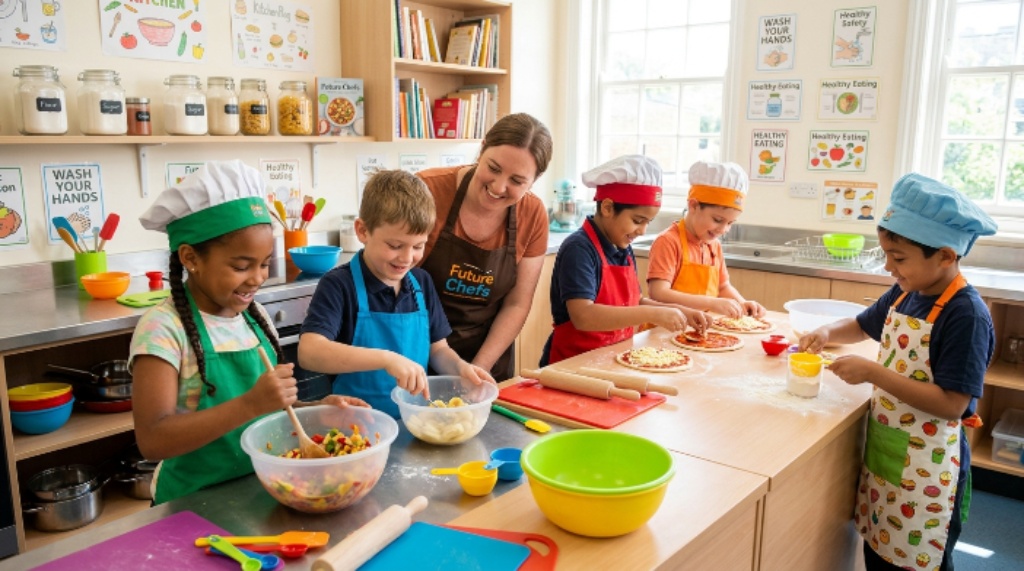
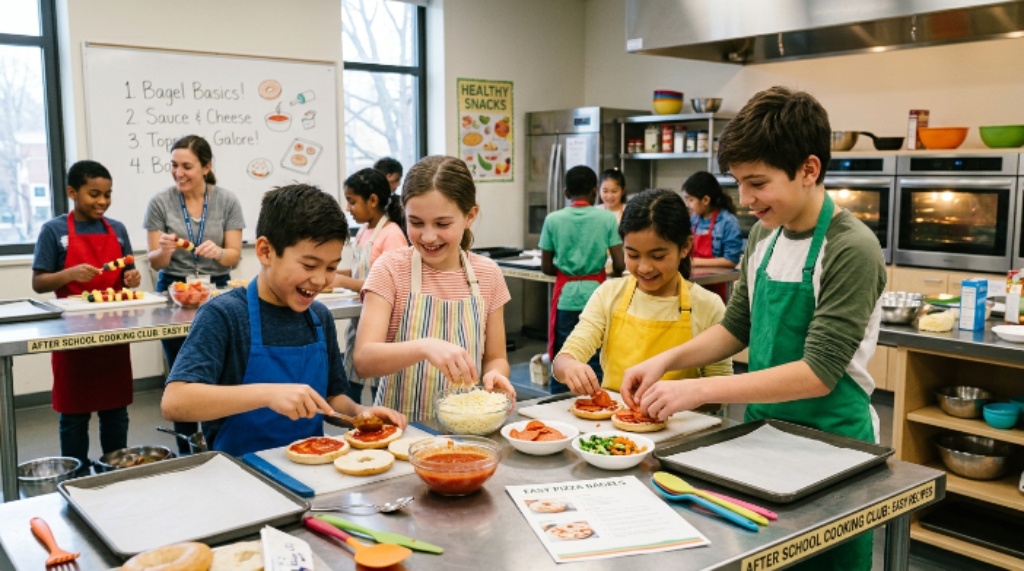
Build Your Own Pizza Day
Allow students to prepare individual pizzas using healthy toppings. Every participant creates a unique meal reflecting personal preferences.
This activity also introduces portion control and balanced ingredient choices. Children enjoy comparing their creative designs afterward.
Smoothie Science Workshop
Smoothies help children understand flavour combinations and nutrition simultaneously. Participants explore fruits, vegetables, dairy, and plant based ingredients.
Students can compare texture, colour, and sweetness during tasting sessions. Learning feels natural because every experiment produces delicious results.
Pasta Creation Station
Fresh pasta activities teach rolling, shaping, and cooking techniques. Students also prepare simple homemade sauces using fresh ingredients.
This lesson introduces kitchen organisation because timing matters during preparation. Teamwork becomes essential throughout the cooking process.
Sandwich Design Competition
Challenge students to create nutritious sandwiches with colourful ingredients. Encourage balanced combinations rather than unusual toppings alone.
Judging categories may include creativity, nutrition, presentation, and taste. Friendly competition increases enthusiasm without creating unnecessary pressure.
Breakfast For Dinner Night
Breakfast recipes usually require affordable ingredients and simple preparation methods. Students enjoy preparing pancakes, scrambled eggs, breakfast burritos, or oatmeal creations.
These meals also demonstrate that healthy cooking remains flexible. Children discover practical recipes they can repeat independently.
Seasonal Harvest Cooking
Use fresh seasonal produce whenever possible. Students learn why fruits and vegetables change throughout the year.
Seasonal lessons may include:
- Apple recipes during autumn
- Citrus dishes during winter
- Berry desserts during spring
- Fresh salads during summer
Junior Chef Competition
Organise small cooking competitions every few months. Teams receive identical ingredients and limited preparation time.
Friendly judging focuses on teamwork, cleanliness, creativity, and presentation instead of perfection. Every participant receives positive feedback afterward.
Skills Children Develop Through Cooking Clubs
Cooking clubs strengthen many everyday abilities beyond preparing meals. These valuable skills continue helping children throughout adulthood.
Important skills include:
- Measuring accurately
- Following directions
- Problem solving
- Time management
- Communication
- Teamwork
- Creativity
- Food safety awareness
- Healthy decision making
- Confidence
Fun Games For Cooking Club Meetings
Learning becomes memorable when games support cooking activities. Short games also keep energy levels high between recipes.
Popular activities include:
- Ingredient guessing game
- Spice smell challenge
- Kitchen equipment matching
- Recipe sequencing race
- Blind taste testing
- Nutrition trivia quiz
These games reinforce important lessons while maintaining excitement. Students remain engaged from beginning to end.
Budget Friendly Cooking Club Ideas
Cooking clubs do not require expensive ingredients or equipment. Smart planning keeps costs manageable without reducing educational value.
Affordable recipe ideas include:
- Homemade popcorn seasoning
- Pasta salad
- Vegetable soup
- Rice bowls
- Bean tacos
- Fruit salad
- Egg muffins
- Baked potatoes
Buying seasonal produce often reduces ingredient costs further. Local grocery sales also help stretch the club budget.
Tips For Keeping Students Engaged
Allow children to participate in recipe selection regularly. Ownership increases excitement before every meeting begins.
Rotate leadership roles among participants during each session. Every child eventually experiences responsibility and teamwork.
Celebrate completed recipes with group tasting activities. Positive recognition encourages continued participation.
Invite guest chefs or parents occasionally for special demonstrations. Fresh perspectives create memorable learning experiences.
Display photos of completed dishes on a classroom board. Students enjoy sharing their accomplishments with friends and families.
Equipment Every Cooking Club Needs
Basic equipment supports most beginner friendly cooking activities. Quality tools improve both safety and efficiency.
Essential items include:
- Mixing bowls
- Measuring cups
- Measuring spoons
- Cutting boards
- Child friendly knives
- Baking trays
- Whisks
- Silicone spatulas
- Aprons
- Food storage containers
Keeping equipment organised saves valuable preparation time. Students also learn proper kitchen organisation habits.
Encouraging Family Participation
Send recipe cards home after every meeting. Families can recreate favourite dishes together during weekends.
Invite parents to attend showcase cooking events twice each year. Children proudly demonstrate their growing kitchen skills.
Create simple home cooking challenges between club sessions. Small family activities strengthen learning outside school.
Encourage children to help prepare one family meal weekly. Regular practice builds confidence through real experience.
Conclusion
The best after school cooking clubs combine practical learning with creativity, teamwork, and healthy habits. Simple recipes, engaging themes, and hands on activities keep children motivated while building lifelong skills. Every session creates opportunities for confidence, responsibility, and curiosity to grow naturally. Start planning your cooking club today and inspire young chefs to discover the joy of preparing delicious meals together.
FAQs
What age is best for an after school cooking club?
Children aged six and older can participate with activities matched to their abilities.
How long should each cooking club session last?
Most successful sessions last between sixty and ninety minutes.
What recipes work best for beginners?
Simple snacks, sandwiches, muffins, and pasta dishes make excellent beginner recipes.
How can cooking clubs improve learning?
Cooking develops math, reading, teamwork, and problem solving through practical activities.
How often should a cooking club meet?
Meeting once each week provides consistent learning without overwhelming students.