
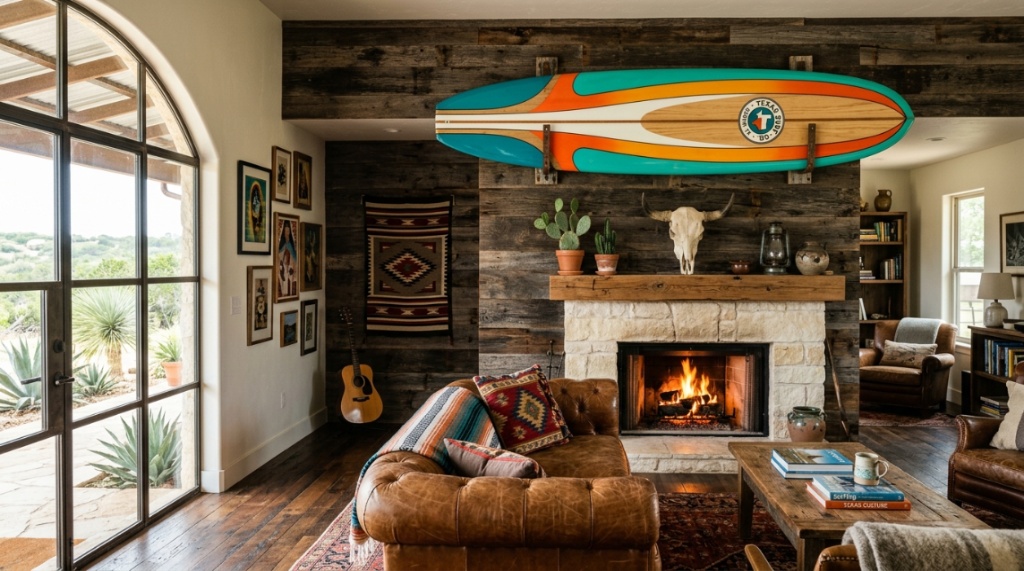
You love your surfboard. It has carried you through glassy mornings at South Padre and mushy afternoons at Galveston. But now it sits in your garage leaning against a dusty wall, collecting sand and getting dinged. You want to turn it into art that reflects your Texas surf lifestyle, but you have no clue where to start. The problem is real: too many mounting options, confusing hardware, and the fear of drilling into your drywall only to watch your prized board crash to the floor. This guide solves that. Whether you are in Austin, Corpus Christi, or Dallas, learning how to display your surfboard on a wall in Texas is easier than paddling out in a rip current. We cover the exact methods, tools, and local considerations so your board stays safe and looks incredible.
Why Should You Display a Surfboard on a Wall in Texas?
Displaying a surfboard on a wall in Texas transforms your board from a forgotten piece of gear into a powerful design statement. It honors your time in the water, saves floor space, and protects the board from damage. In a state known for its love of bold decor, a surfboard mount adds coastal personality to any room.
Preserving Your Surfboard from Texas Heat and Humidity
Texas summers bring punishing heat and high humidity that can warp foam cores and delaminate fiberglass. Storing a board flat on the ground traps moisture underneath. Wall mounting keeps air circulating around the entire board, reducing the risk of long-term damage. In coastal cities like Corpus Christi, this is especially critical. You extend the lifespan of your board significantly by getting it off the floor and onto a wall where air flows freely.
Saving Floor Space in Apartments and Homes
Most Texans live in spaces where square footage comes at a premium. A surfboard leaning in a corner eats up usable area and creates a tripping hazard. Wall mounting reclaims that space instantly. You can hang a board above a couch, in a home office, or even in a hallway without sacrificing any floor area. This is a smart solution for urban dwellers in Houston or Dallas who want surf vibes without clutter.
Creating a Visual Focal Point with Coastal Character
A well-mounted surfboard draws the eye and sparks conversation. It tells visitors you are connected to the ocean, even if you are miles from the nearest beach. In Texas, where surf culture runs deep from Port Aransas to Matagorda, a wall-mounted board feels authentic. It turns a blank wall into a story. You are not just decorating; you are showcasing a piece of your identity.
What Is the Best Way to Mount a Surfboard on a Wall in Texas?
The best way to mount a surfboard on a wall in Texas depends on your wall type, board weight, and whether you want a floating or angled display. The two most reliable methods are using rubber-coated hangers or creating a homemade wooden cradle. Both methods work well across Texas homes, but you must choose based on your specific setup.
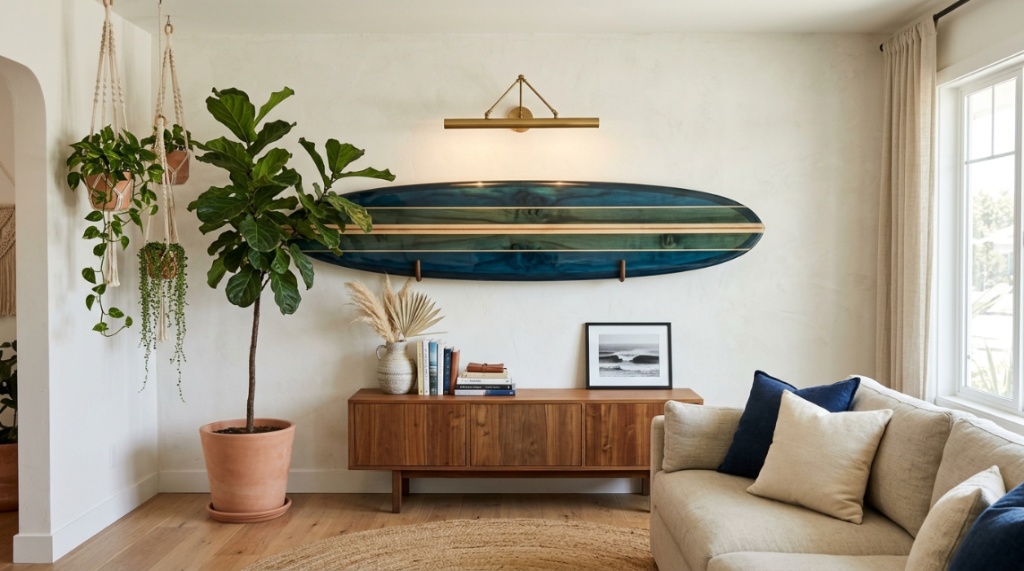
Using Surfboard Wall Hangers (Store-Bought Solutions)
Store-bought hangers are the easiest route for most people. These are purpose-built brackets that hold your board by the rails without damaging the foam or fiberglass. Look for hangers with rubber padding to prevent scratches and slipping. Installation typically requires two screws and wall anchors for drywall. Brands like Ocean and Earth or FCS offer reliable options. This method works great for standard drywall and takes under 20 minutes to install.
Building a DIY Wooden Cradle Mount
A DIY wooden cradle gives you total control over the angle and appearance. You can build it from a single 2×4 board cut into two pieces and sanded smooth. Wrap the cradles with felt or neoprene padding to protect the board’s rails. Attach the cradles to studs or use heavy-duty toggle bolts for drywall. This method costs under $20 and allows you to customize the fit for boards with unusual shapes or thick rails. It is ideal for longboards or heavy gun boards used in bigger Texas swell.
Rubber Padded versus Felt Padding: Which Is Safer?
Rubber padding offers better grip and does not absorb moisture, making it ideal for Texas humidity. Felt padding can wick moisture and eventually cause discoloration on your board’s rails. For long-term display, choose rubber or silicone padding over felt. If you already have felt wraps, check them regularly for dampness. A quick swap to rubber padding prevents unnecessary wear on your board.
How Do You Choose the Right Location for Your Surfboard Wall Display in Texas?
Choosing the right location involves more than picking a nice-looking wall. You must consider structural support, sunlight exposure, temperature fluctuations, and visual balance. The wrong spot can damage your board or create a safety hazard. Take 10 minutes to evaluate your space before drilling any holes.
If you are working with limited square footage rather than an expansive living area, check out our guide on Surfboard Wall Mount Options for Small Apartments This Year to maximize your vertical space.
Checking for Wall Studs and Load Capacity
Your surfboard might weigh between 6 and 15 pounds, but the mounting system must hold more than that during accidental bumps or vibrations. Locate wall studs using a stud finder before marking your drill points. If you cannot hit a stud, use heavy-duty toggle bolts rated for at least 50 pounds. Never rely on plastic drywall anchors alone, especially in older Texas homes with thinner drywall. Secure mounting prevents your board from crashing down unexpectedly.
Avoiding Direct Sunlight to Prevent UV Damage
Texas sun is brutal. Direct sunlight pouring through a window will fade the resin artwork on your board within months. It can also cause the foam to expand and contract, creating micro-cracks over time. Choose a wall that does not receive direct sunlight for more than a few hours a day. If you must place the board near a window, use UV-protective film to shield it. Your board’s colors and structural integrity will last much longer.
Considering Room Temperature and Airflow
Avoid mounting your board in an uninsulated garage, attic, or sunroom where temperatures swing wildly. Extreme heat can soften the resin, while freezing snaps can cause delamination. In Texas, that means keeping your board indoors in a climate-controlled room. Bedrooms, living rooms, and home offices are good choices. Ensure there is airflow around the board so moisture does not get trapped against the wall.
Which Mounting Hardware Works Best for Texas Drywall and Plaster?
Texas homes feature a mix of modern drywall and older plaster walls, especially in historic neighborhoods like Austin’s South Congress area. Each wall type requires specific hardware. Using the wrong anchor leads to sagging or wall damage. You must match the hardware to your wall construction for a safe, lasting display.
Drywall Anchors versus Toggle Bolts for Surfboard Mounts
Drywall anchors work for lighter boards under 10 pounds when placed into studs is impossible. However, toggle bolts provide far superior holding strength for heavier boards. Toggle bolts distribute weight across a larger surface area behind the drywall. For a surfboard wall display Texas setup, opt for toggle bolts rated for at least 50 pounds. They cost a little more but eliminate the worry of your board falling.
Mounting on Plaster Walls without Cracking
Plaster walls require special care. Drill slowly using a masonry bit to avoid cracking the brittle surface. Use a plastic wall anchor designed for plaster, or better yet, anchor directly into a wooden stud behind the plaster. Apply painter’s tape over the drill area to reduce chipping. Plaster is common in older Texas homes, so take your time. A cracked plaster wall is much harder to repair than a drywall hole.
Using Stud Finder and Level for Precision
Never skip using a stud finder and a level. Mark your hanger positions after confirming stud locations. Even a quarter-inch misalignment makes your board look crooked and puts uneven stress on one hanger. Use a 4-foot level to ensure both brackets sit at the same height. Precision here takes two extra minutes but pays off in a professional-looking display.
How Do You Prepare a Surfboard for Wall Display in Texas?
Preparation prevents damage. A surfboard heading to the wall needs a thorough cleaning, removal of any wax, and sometimes minor repairs. Skipping these steps leads to dirty displays and potential deterioration. Spend 30 minutes prepping your board before you hang it anywhere.
Cleaning Off Wax and Salt Residue
Old wax attracts dust and turns yellowish over time. Use a wax comb or a plastic scraper to remove the bulk of the wax. Then wipe down the board with a soft cloth and mild soapy water to remove salt residue. Salt crystals can corrode fins and fin boxes if left untreated. Rinse with fresh water and dry completely before mounting.
Repairing Minor Dings and Pressure Dents
A ding on a display board is an eyesore. Use a sun-cure resin kit to fill small dings and cracks. Sand the area smooth after curing. This not only looks better but also prevents the ding from growing over time. For pressure dents, use a heat gun carefully to pop them out, then let the board cool. A repaired board displays much better and retains its value.
Removing Fins for Safer Storage
Fins left on a mounted board create a safety hazard and can scratch the wall. Remove all fins using the appropriate fin key. Store them in a zippered pouch taped to the back of the board or placed in a drawer. Display your board finless for a cleaner, sleeker look. Plus, you eliminate the risk of someone bumping into sharp fin edges.
Can You Display a Surfboard Horizontally or Vertically in Texas?
Yes, you can display a surfboard both horizontally and vertically in Texas, but each orientation serves a different purpose and requires specific hardware. Horizontal mounting is the most common and fits above doorways or couches. Vertical mounting saves width in narrow hallways or tall rooms. Choose based on your available wall space and visual preference.
Horizontal Mounting for Standard Wall Spaces
Horizontal mounting works best for medium to long walls where the board can stretch lengthwise without obstructing walkways. Use two cradles or hangers spaced evenly along the board’s length. Position the board with the stringer facing outward or with the deck facing the room. Horizontal displays feel grounded and balanced. They work great in bedrooms and living rooms above furniture.
Vertical Mounting for Tight Hallways and Tall Ceilings
Vertical mounting places the board upright, either nose up or tail up. This is perfect for narrow spaces like hallways or entryways. You need only one secure hanger at the top and a soft rest at the bottom to prevent the tail from sliding. Make sure the board is well-secured so it does not sway. Vertical displays add height and drama to a room, drawing the eye upward.
Angled Display for a Dynamic Look
Angling your board slightly off the wall creates a dynamic, gallery-like appearance. Use adjustable wall mounts that allow you to tilt the board 15 to 30 degrees. This catches light differently throughout the day and makes the board pop. Angled mounts require hardware that locks in place to prevent slipping. They work especially well for shortboards or boards with vibrant artwork you want to highlight.
Does Texas Climate Affect How You Should Mount a Surfboard?
Texas climate absolutely affects mounting decisions. High humidity, extreme heat, and occasional cold snaps all impact the materials and longevity of your display. You must choose hardware and placement that account for these factors. Ignoring climate leads to rusted brackets, warped boards, and failed mounts.
Choosing Rust-Resistant Hardware for Coastal Humidity
If you live near the coast in places like Corpus Christi or Galveston, humidity is a constant issue. Stainless steel or galvanized screws and brackets resist rust far better than standard steel. Plastic and nylon hangers are also excellent choices because they never corrode. Check your hardware every few months for signs of rust, especially if your home lacks air conditioning. A quick preventive swap saves your wall and your board.
Mitigating Expansion and Contraction from Temperature Swings
Texas experiences temperature swings of 30 degrees or more in a single day. This causes surfboard materials to expand and contract. Rigid mounts that do not allow slight movement can stress the board’s rails. Use padded hangers that grip firmly but allow a tiny amount of flex. Do not overtighten any straps. Let the board breathe naturally within its cradle.
Protecting Your Board from Dust and Pollen
Texas produces a lot of airborne dust and pollen, especially in spring and fall. A wall-mounted board collects dust on its top surface. Wipe it down monthly with a microfiber cloth. Consider using a clear surfboard display case if dust is a major issue in your area. A simple monthly cleaning keeps your board looking fresh without heavy maintenance.
What Are the Best Affordable Wall Mount Options Available in Texas?
You do not need to spend a fortune to get a reliable wall mount. Several affordable options are available that balance quality and cost. Local surf shops in Texas often carry basic hangers, but online retailers offer competitive pricing. Focus on function and padding rather than brand names.
Under $30: Simple Rubber Hangers
Basic rubber-coated hangers run between $15 and $30. They hold boards securely and require minimal installation. Brands like the Surfboard Shack and BZ Hangers offer reliable kits. These are the best value for most standard surfboards. They work well in apartments where you might move them later.
Between $30 and $60: Adjustable and Rotatable Mounts
Adjustable mounts allow you to change the angle of your display. Some even rotate up to 360 degrees so you can flip the orientation. These are great for shortboards or boards used seasonally. Look for models with metal brackets and thick rubber padding. The extra cost pays for flexibility and better build quality.
DIY Options Under $10 Using Rope or Straps
For the ultimate budget solution, use sturdy climbing rope or heavy-duty webbing straps. Loop the rope around each end of the board and secure it to wall hooks. This creates a semi-floating look that is very affordable. Make sure the rope is rated for at least 50 pounds and check knots regularly. DIY rope mounts have a rustic, coastal feel that suits many Texas homes.
How Do You Ensure Safety and Stability for Your Mounted Surfboard?
Safety is non-negotiable. A falling surfboard can damage floors, furniture, or worse, injure a person or pet. Stability begins at the installation stage and continues with periodic checks. Follow these steps to keep your board secure for years.
Testing the Mount Before Letting Go
After installing the hangers, place the board gently into the cradles. Give it a gentle tug to test if it shifts. Hang on the board lightly with your hand to simulate weight. If anything moves, retighten the screws or add additional anchors. Never walk away from a board that feels loose. A 30-second test prevents a world of trouble.
Checking Screws and Anchors Every Three Months
Screws can loosen over time due to vibrations from doors slamming or nearby traffic. Every three months, give the screws a quarter-turn with a screwdriver. Do not overtighten, just snug them up. Check the condition of rubber padding for cracks or wear. Replace any degraded padding immediately.
Keeping the Board Away from High-Traffic Zones
Do not mount your surfboard over doorways where people walk regularly, especially if the board sticks out. Avoid placing it near children’s play areas or pet sleeping spots. The safest location is above a piece of furniture or in a corner where accidental contact is unlikely. A little foresight in placement keeps everyone safe.
Frequently Asked Questions
Can you mount a surfboard on a wall without damaging the board?
Yes, you can mount a surfboard without damaging it by using padded hangers that grip the rails. Make sure the padding is rubber or silicone and clean your board before mounting. Avoid using bare metal brackets or sharp hardware that can scratch the surface.
How much weight can wall anchors hold for a surfboard?
Standard plastic wall anchors hold up to 20 pounds, which works for most shortboards. For heavier longboards, use toggle bolts rated for at least 50 pounds. Always check the anchor rating against your board’s weight plus a safety margin.
Is it safe to mount a surfboard in a garage in Texas?
Mounting in a garage is possible but not ideal due to temperature swings and humidity. If you must mount in a garage, use rust-resistant hardware and monitor the board for warping. A climate-controlled garage is much safer than an unconditioned one.
Do I need to remove the fins before mounting?
Yes, remove the fins before mounting. Fins can scratch the wall, injure someone, or get damaged themselves. Store them separately to keep everything safe and your display clean.
Can I display a foam board or soft top on the wall?
Yes, you can display foam boards and soft tops using the same padded hangers. Be extra gentle because foam boards dent more easily. Choose wide cradles that distribute the weight evenly to avoid pressure marks.
How high should I mount the surfboard on the wall?
Mount the board so its center is at eye level, roughly 55 to 65 inches from the floor. Adjust based on your ceiling height and the board’s length. The board should be accessible for dusting but high enough that people do not bump it.
What is the cheapest way to display a surfboard on a wall?
The cheapest way is using a DIY rope cradle with two sturdy wall hooks. Total cost can be under $10. Ensure the rope is strong and the hooks are secured into studs or with toggle bolts.