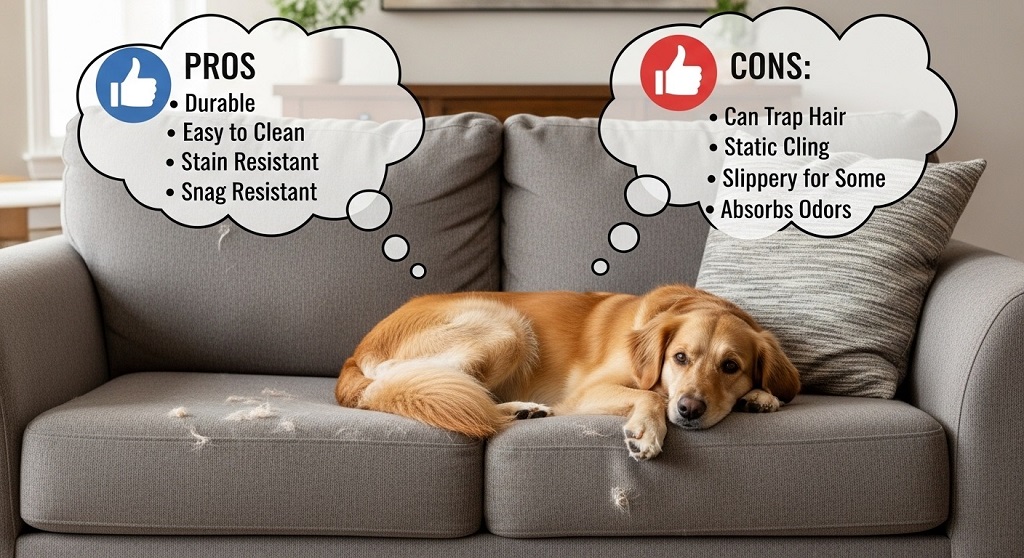
A microfiber couch is made from ultra-fine synthetic fibers woven tightly together. Many dog owners choose it because tight weave upholstery resists pet hair, scratches, and stains better than many natural fabrics.
You bring home a new couch. Within weeks, it’s covered in fur, smells like wet dog, and has claw marks on the arms. Sound familiar?
For households with dogs, furniture is not just décor. It becomes a scratching post, a nap station, and sometimes a muddy landing zone. That’s why more pet owners are searching for durable, easy-clean upholstery options. Microfiber often tops that list.
Microfiber is typically made from polyester or a polyester-nylon blend. The fibers are thinner than a strand of silk. Because of this, manufacturers can create tight weave upholstery that leaves little room for dirt, dander, and pet hair to settle deep inside.
According to industry reports from furniture manufacturers, microfiber has been widely used in residential sofas since the early 2000s due to its durability and lower production cost compared to natural fabrics like cotton or linen.
But is it really the best couch material for dogs? Or is it just marketing?
Let’s break down the pros and cons using real-world performance data and practical experience.
Is Microfiber Couch Good for Dogs Overall?
Short answer: Yes, microfiber is generally a good couch material for dogs because it resists scratches, repels pet hair, and is easy to clean. However, it is not fully claw-proof or odor-proof.
The main reason microfiber works well in pet-friendly homes is its structure. The tightly woven fibers create a surface that:
- Prevents claws from easily snagging threads
- Reduces deep penetration of liquids
- Makes pet hair easier to vacuum
- Handles regular cleaning without damage
In comparison, loose-weave fabrics like chenille or tweed allow claws to hook into loops. That leads to visible pulls and fraying within months.
However, microfiber is not indestructible. A large dog repeatedly digging into cushions can still cause wear over time.
The key is understanding where microfiber performs well—and where it falls short.
Why Is Tight Weave Upholstery Better for Dogs?
Short answer: Tight weave upholstery reduces snagging, limits dirt penetration, and improves durability under daily pet use.
Dogs bring three major challenges to furniture:
- Claws
- Hair shedding
- Accidents and drool
With tight weave upholstery, the threads are packed closely together. That makes it harder for claws to slip between fibers. In laboratory abrasion tests like the Martindale rub test (used in upholstery performance measurement), tightly woven synthetic fabrics typically outperform loose weaves in durability cycles.
For pet owners, that means:
- Fewer visible pulls
- Slower fabric breakdown
- Longer lifespan
Microfiber falls into this tight-weave category. That is one of the main reasons it is often recommended as a pet-friendly sofa fabric.
Is Stain-Resistant Microfiber Really Easy to Clean?
Short answer: Yes, stain-resistant microfiber is easier to clean than most fabric sofas, especially for pet accidents and muddy paw prints.
Microfiber fibers are tightly packed and often treated during manufacturing to improve water resistance. This slows down liquid absorption.
When a dog tracks in mud or has a minor accident, you typically have a window of time before the liquid seeps deep into the cushion.
How to Clean Microfiber After a Dog Accident
- Blot immediately with a dry cloth. Do not rub.
- Use mild soap and water for water-safe microfiber.
- For solvent-coded microfiber (check the tag), use rubbing alcohol lightly sprayed.
- Allow to air dry. Brush gently to restore texture.
Many manufacturers label microfiber with cleaning codes such as “W” (water-based cleaner) or “S” (solvent-based). Always check before cleaning.
Compared to cotton, which absorbs moisture quickly, stain-resistant microfiber provides more control during cleanup.
However, repeated deep stains without immediate cleaning can still lead to odor buildup.
Does Microfiber Resist Dog Hair and Shedding?
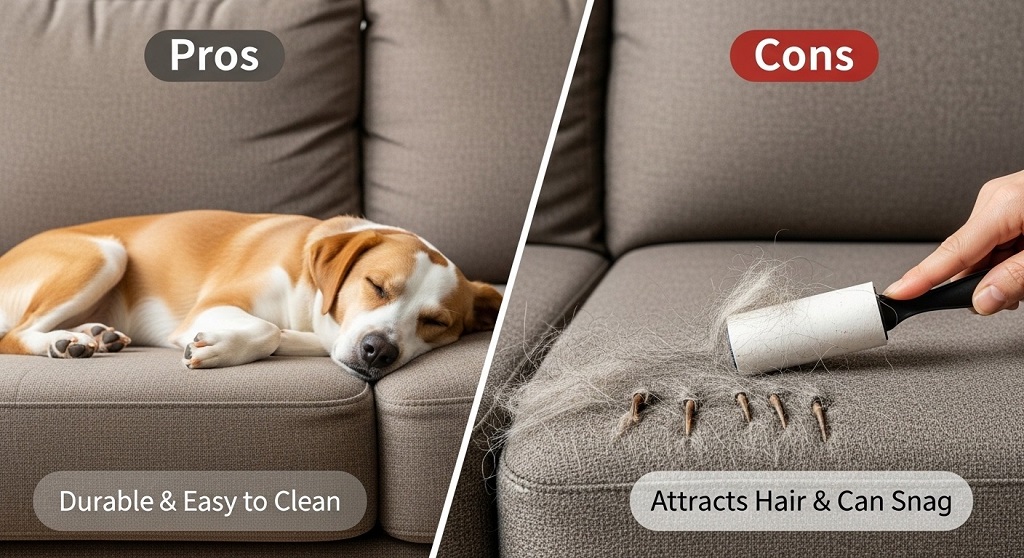
Short answer: Yes, microfiber does not trap pet hair as deeply as textured fabrics, making vacuuming easier.
Shedding is one of the biggest pain points for dog owners. Breeds like German Shepherds and Labradors can shed heavily year-round.
Microfiber’s smooth surface prevents hair from embedding into loops. Instead, fur sits on top of the fabric. That means:
- A lint roller works effectively
- A vacuum removes hair quickly
- Less buildup over time
By contrast, velvet and chenille trap hair inside their pile. Removing it requires more effort and sometimes specialized pet hair tools.
If shedding is your primary concern, microfiber performs well.
Is Microfiber Durable Enough for Large Dogs?
Short answer: Microfiber is durable for most households, but very large or highly active dogs can still cause wear over time.
Durability depends on:
- Fabric weight (measured in GSM)
- Frame construction
- Cushion density
- Dog behavior
A 90-pound dog that jumps onto the couch daily will stress seams and cushions regardless of material.
In consumer case reviews published by major furniture retailers, microfiber sofas frequently receive higher durability ratings in homes with pets compared to linen or cotton alternatives.
However, if your dog digs before lying down, repeated claw friction can cause visible fading or surface roughness over time.
Microfiber is resistant. It is not claw-proof.
What Are the Downsides of Microfiber Couches for Dogs?
Short answer: Microfiber can retain odors, attract oil stains, and show water marks if not cleaned properly.
Every material has trade-offs.
1. Odor Retention
If spills soak through the cushion insert, odor can linger. This is common when accidents are not cleaned quickly.
2. Oil Absorption
Natural oils from a dog’s coat may leave darker patches over time, especially on lighter colors.
3. Water Marks
Improper cleaning can leave rings or discoloration. Even stain-resistant microfiber requires correct cleaning methods.
4. Static Electricity
In dry climates, microfiber may build static, attracting loose fur.
These are manageable issues, but they should be considered before purchasing.
How Does Microfiber Compare to Leather for Dog Owners?
Short answer: Microfiber is softer and more affordable than leather, but leather may resist odors and hair better.
| Feature | Microfiber | Leather |
|---|---|---|
| Scratch Resistance | Moderate | High (but can show marks) |
| Hair Removal | Easy | Very Easy |
| Comfort | Soft, fabric feel | Firm, smooth |
| Cost | Lower | Higher |
| Odor Resistance | Moderate | High |
If budget is a concern, microfiber offers strong value. If long-term odor resistance matters more, leather may be worth the investment.
What Should You Look for When Buying a Microfiber Couch for Dogs?
Short answer: Choose high-GSM fabric, removable cushion covers, and reinforced seams.
- Check for tightly woven construction
- Ask about stain-resistant microfiber treatment
- Look for removable and washable covers
- Inspect double-stitched seams
- Choose darker colors to hide stains
Color matters. Gray, charcoal, and brown hide shedding better than white or beige.
Also examine the cushion fill. High-density foam holds shape better under repeated jumping.
Conclusion: Is Microfiber Couch Good for Dogs?
Microfiber is one of the most practical sofa materials for dog owners.
It is not perfect. Large dogs and poor cleaning habits can still shorten its lifespan. But compared to many natural fabrics, microfiber delivers strong durability at a lower cost.
If you want a balance between comfort, affordability, and pet resistance, microfiber is a solid choice.
Ready to upgrade your pet-friendly living room? Evaluate your dog’s behavior, compare fabric specs, and choose a microfiber couch designed for daily wear. The right choice today can save you from replacing furniture in a year.
Frequently Asked Questions (FAQs)
Is microfiber couch good for dogs that shed a lot?
Yes. Microfiber does not trap hair deeply. Pet hair sits on the surface and can be removed with a vacuum or lint roller.
Does stain-resistant microfiber protect against urine?
It slows absorption but does not fully block it. Immediate blotting is necessary to prevent deep penetration and odor buildup.
Can dogs scratch microfiber couches?
Yes, but tight weave upholstery reduces visible snagging compared to loose fabrics. It is resistant, not claw-proof.
Is microfiber better than fabric sofas for pets?
Microfiber is a type of fabric, but it performs better than cotton or linen due to its tighter weave and synthetic durability.
How long does a microfiber couch last with dogs?
With proper care, many microfiber sofas last 5–10 years, depending on usage and dog size.
Does microfiber hold dog smell?
It can if spills soak into cushions. Regular cleaning and deodorizing help prevent odor buildup.
What color microfiber couch is best for dog owners?
Medium to dark shades like gray or brown hide shedding and stains better than light colors.
Related Topics: Hotels in North Wales with a View
What Next: Four Types Of Data Analysis