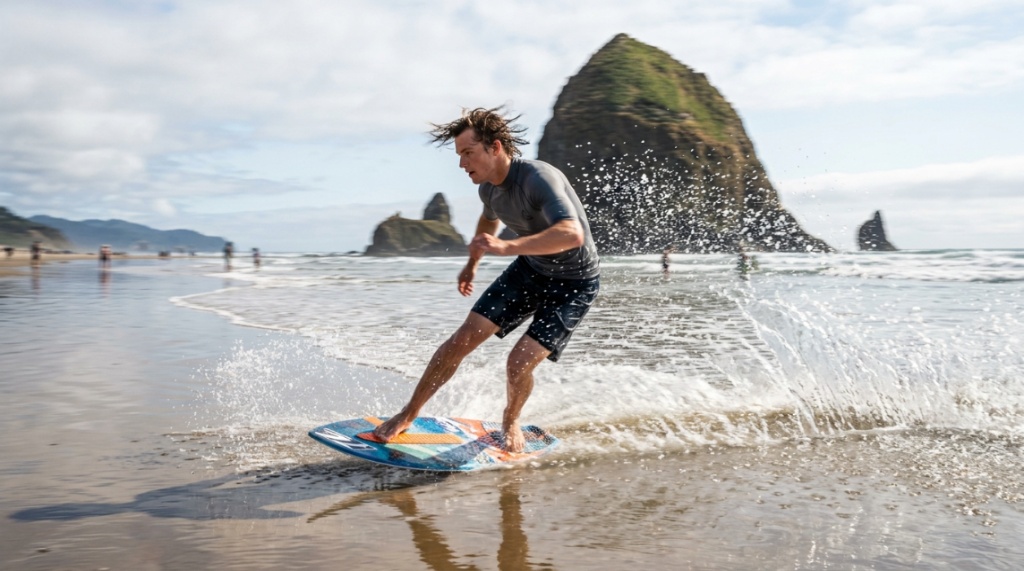
You’ve watched the pros glide across the glassy sheets of sand at Agate Beach, and now you’re ready to carve your own line. But walking into a shop in Oregon with a wet wetsuit and a wallet full of hope can be overwhelming. The problem is simple: Oregon’s beaches are not California. We have heavier water, colder temps, and sandbars that shift like a moving target. You don’t need a generic board; you need the best skimboard Oregon 2026 can offer for our specific conditions. This guide will break down exactly what to look for, from board shape to material science, so your next session isn’t a frustrating wipeout.
What Makes Oregon’s Skimboarding Conditions Unique?
The Pacific Northwest Wave Profile
Oregon waves are typically more powerful and steeper than those found in Southern California or Florida. They arrive with a colder, denser mass of water, which means your board needs a higher volume to maintain floatation. A typical low-volume pro board that works in San Diego will sink like a rock in Seaside. You need a board designed for punchier waves and softer landings.
Sandbar Dynamics on the Oregon Coast
Our sandbars shift dramatically with winter storms and summer swells. Unlike the consistent beaches of Hawaii, Oregon bars can change overnight. This means you need a board that is versatile enough to handle both a steep, steep drop and a long, flat glide section. A hybrid shape—neither fully a flatland board nor a pure wave board—often performs best here.
Cold Water and Wetsuit Factors
Let’s be honest: you’re wearing a 5/4 wetsuit, boots, and gloves. That extra weight and stiffness changes how you run and how you pop up. A board that is too heavy or too thin will throw off your balance. You need a board that compensates for the bulkier gear, offering a slightly larger surface area without sacrificing control.
Which Type of Skimboard Works Best in Oregon?
Flatland vs. Wave Boards: The Oregon Compromise
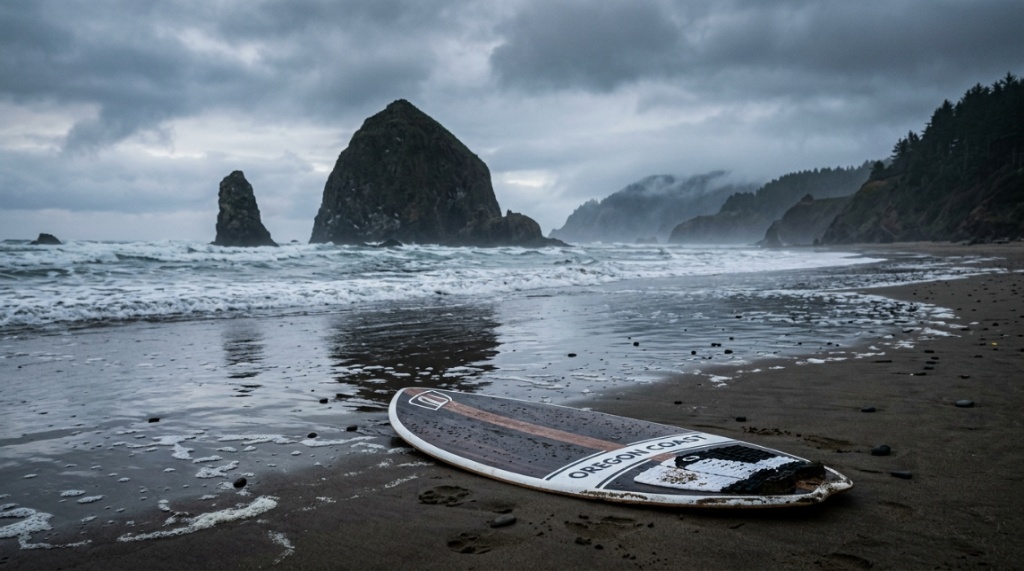
Pure flatland boards are too thin and snappy for Oregon waves. Pure big-wave guns are too heavy to run with winter boots. The best skimboard Oregon 2026 users are turning toward the hybrid or “all-terrain” style. These boards feature a moderate rocker (curvature) and a slightly thicker rail, giving you enough buoyancy to float in choppy conditions while still being fast enough for flatland tricks.
Material Choices: Wood, Carbon, or Foam?
| Material | Pros for Oregon | Cons for Oregon |
|---|---|---|
| Wood (Plywood) | Cheap, durable for rocky flats | Heavy, sinks quickly, difficult to run with wetsuit |
| Carbon Fiber | Stiff, lightweight, excellent response | Expensive, can be brittle on cold days |
| Foam Core (EPS) | Buoyant, floats well in heavy water | Less durable for rocks, needs protective tape |
Why Foam Core is Gaining Popularity
More Oregon riders are switching to foam core boards because they float better in the heavier water. When you miss a wave and get caught in the washing machine, a foam board pops back up faster. For the 2026 season, look for boards with a high-density EPS core wrapped in a durable fiberglass or carbon skin. This gives you the float of foam with the stiffness of carbon.
How to Choose the Correct Size for Your Body
The Weight-to-Length Ratio
A common mistake is buying a board based on height rather than weight. For Oregon conditions, you need a longer board than you think. If you weigh between 160–190 lbs, a 48-inch board is the minimum. For 190–220 lbs, go with a 50–52 inch board. The extra length gives you stability when running with boots and helps you stay on top of the water during the initial planing phase.
Width and Thickness Considerations
Width matters as much as length. A wider board (21–22 inches) provides a more stable platform for the choppy Oregon water. Thickness is critical for floatation. Look for boards between 5/8 inch and 3/4 inch thick. A thinner board will sink faster, while a thicker board will give you more time to reach the wave.
- Under 150 lbs: 44–46 inch length, 20–21 inch width
- 150–180 lbs: 46–48 inch length, 21–22 inch width
- 180–220 lbs: 48–52 inch length, 22–23 inch width
- Over 220 lbs: 52+ inch length, 23+ inch width
What Rocker Shape Should You Look For?
The Role of Rocker in Heavy Water
Rocker is the curve of the board from nose to tail. A board with too much rocker will feel slow and bouncy. Too little rocker will “pearl” (dive) into the steep Oregon waves. For Oregon, aim for a medium rocker profile—something around 1.5 to 2 inches of lift at the nose. This allows you to keep the nose up when dropping into steep, cold water without sacrificing speed on the flat sections.
Choosing the right board is only half the battle; maintaining your equipment is just as crucial for performance. Just as you need to protect your board’s foam core, you should also keep your traction pads clean and Organize Surfboard Fins Like a Pro to ensure your entire surf and skim gear setup stays organized and ready for the Oregon coast.
Continuous vs. Hybrid Rocker Lines
Continuous rocker (a smooth curve) is predictable and good for beginners. Hybrid rocker (flatter in the middle with more curve at the nose) is better for Oregon because it gives you both stability and wave-catching ability. Look for a board that has a slightly flatter tail section to help you generate speed in the flats.
How Important Is the Tail Shape?
Pin Tails vs. Squash Tails
Pin tails are designed for sharp turns in hollow waves, but they are harder to control on the run. Squash tails (wide, blunt tails) are more forgiving and offer better stability when you are popping up. For Oregon, the squash tail is the safer, more practical choice. It gives you a larger surface area for landing and helps prevent your board from sinking during the initial run.
Bat Tail and Swallow Tail Options
Bat tails (notched tails) release water quickly, making them good for very steep drops. Swallow tails look cool but are less practical for the choppy conditions we see in Oregon. Stick with a squash or rounded pin for the best all-around performance.
Which Brands Are Dominating the Oregon Market in 2026?
Local Favorites and Tested Names
Exile and Victoria are the two heavyweights. Exile boards are known for their durability and responsive carbon fiber layups. Victoria boards have a more forgiving foam core that many Oregon riders prefer for colder water. Smaller boutique brands like Zap Pro or Doug’s Skimboards also make custom shapes that work well for our region.
If you are looking for a comprehensive, curated list of top-performing boards specifically tested for Oregon conditions, check out the detailed reviews at best skimboard Oregon 2026. This resource breaks down the top models for our unique sandbar and wave conditions.
Custom vs. Off-the-Shelf Options
If you have the budget, a custom board from a local shaper is the ultimate choice. They can adjust the rocker, width, and foam density for your exact weight and the beach you ride most often. Off-the-shelf boards from major brands are still excellent, but they are designed for the average rider. If you are on the heavy or light side, custom is worth the investment.
How to Maintain Your Skimboard in Oregon’s Climate
Dealing with Constant Moisture
Oregon is wet. Rain, fog, and saltwater will destroy a board if you don’t care for it. After every session, rinse your board with fresh water—not just a splash, a thorough rinse. Use a soft sponge to remove salt crystals, which can eat through the fiberglass over winter. Never leave your board in a hot car or in direct sunlight, as the UV can warp the foam core.
Wax and Traction Pads
In the cold water, your feet will go numb. Use a high-quality traction pad with a thick, grippy texture. Wax alone is not enough in Oregon because it melts and gets hard again in the cold. A combination of a traction pad and a light coat of cold-water wax (applied in the spring) gives you the best grip.
Can Beginners Ride Oregon Beaches?
The Best Beginner Spots
Yes, but you need the right spot. Avoid Haystack Rock (too crowded and rocky) and instead head to Agate Beach in Newport or the flats at Waldport. These areas have long, flat sandbars at low tide. You need a longer, thicker board—at least 46 inches—to help you get past the whitewash and onto the glassy water.
Essential Safety Gear
Never skimboard alone in Oregon. The currents can be unpredictable, and the water is shockingly cold. Wear a wetsuit (5/4 with boots and gloves), a leash (usually a coiled bungee leash for skimboarding), and consider a surf hat for sun and rain protection. Rip currents are common; learn to identify them before you paddle out.
When Is the Best Time of Year to Skimboard in Oregon?
Summer vs. Winter Conditions
Summer (June–September) offers smaller waves and warmer water (around 55–60°F). This is the best time for beginners and flatland tricks. Winter (October–March) brings massive storm swells and water temps in the low 40s. Only experienced riders with thick wetsuits should try winter skimboarding. The waves are steeper but also more powerful.
Tide Timing and Sandbar Formation
The best skimboarding happens on an outgoing tide, usually two to three hours before low tide. This is when the sandbars are most defined and the water is glassy. Use a tide chart for your specific beach. If the forecast shows a high swell with a low tide, that is your golden window for big, clean waves.
Frequently Asked Questions
Do I need a special board for Oregon, or can I use any skimboard?
You can use any skimboard, but a hybrid board with a foam core and medium rocker will perform significantly better in the heavy, cold water of Oregon. A standard thin wooden board will sink too quickly.
How much should I spend on a quality skimboard for Oregon?
Expect to spend between $200 and $400 for a good used or entry-level new board. A high-end carbon fiber or custom foam board will cost between $450 and $800. It is worth investing in quality to avoid freezing sessions.
What is the best length skimboard for a 190-pound adult?
For a 190-pound adult in Oregon, a 50-inch board is ideal. This gives you enough surface area to float in the heavy water and enough length to generate speed during the run.
Can I skimboard on sandy Oregon beaches with rocks?
Avoid rocky areas like Cannon Beach and parts of Bandon. Stick to wide, sandy beaches like Agate Beach, Waldport, and parts of Pacific City. Always check the tide before you run, as rocks can be exposed at low tide.
Do I need a leash for skimboarding in Oregon?
Yes, always use a coiled bungee leash. It prevents your board from drifting away if you fall and allows you to keep your hands free. A standard surf leash can drag and cause you to trip.
Is skimboarding harder than surfing in Oregon?
Skimboarding has a steeper learning curve because you must run and drop the board perfectly. However, once you learn the timing, it is more forgiving than surfing because you don’t need a big swell. The physical load is higher, though.
What traction pad do Oregon riders prefer?
Most Oregon riders prefer a full-deck traction pad with a diamond or waffle pattern for maximum grip in wet conditions. Brands like Octopus and Traction Pads USA are popular. Avoid wax-only setups in winter.
Conclusion
Choosing the best skimboard Oregon 2026 isn’t about picking the flashiest graphics—it’s about matching the board to our unique environment. You need a board with a foam core for floatation, a medium rocker for steep waves, and a squash tail for stable landings. Focus on a 48–52 inch length if you are an average adult, and don’t skimp on a good wetsuit and traction pad. Prioritize beaches with long, sandy flats like Agate Beach, and always ride with a leash. The Oregon coast is a skimboarder’s paradise if you have the right gear. Take the time to test a few shapes if you can, and when in doubt, lean toward a slightly larger, more buoyant board. Now get out there before the tide changes.