
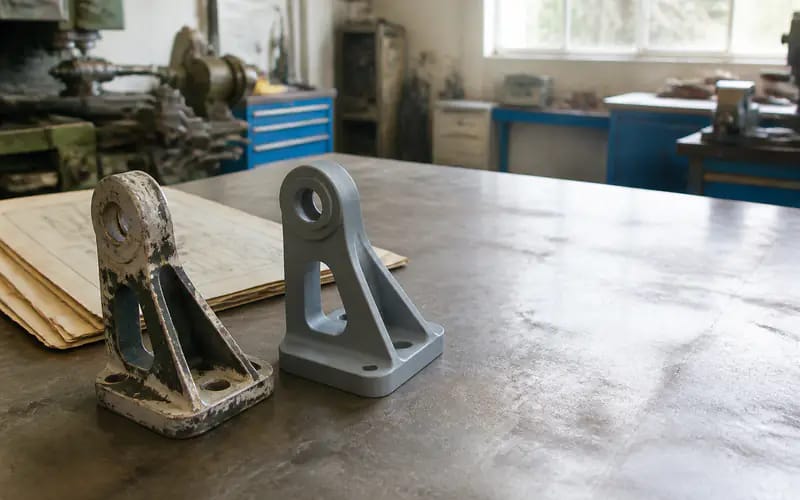
I read Punchline Gloucester’s report on Poeton’s 2027 coating line-up differently depending on whether I was working from legacy drawings and repair manuals for older parts or from new designs for new parts.
For legacy drawings the breadth of coating offered by the new plant is good news, for new designs it offers a menu from which the most restricted items should be ordered last.
A long process list serves two kinds of work
The Polish site will go live with significant anodising capacity alongside hard chrome, cadmium, zinc nickel and chemical conversion coatings for aerospace, defence and automotive work in 2027, with all processes to be Nadcap approved.
Why legacy drawings keep older chemistries alive
Legacy drawings specify a process by a full process specification. Typically maintenance parts are specified in the same way as production parts. As these are approved aerospace parts great care must be taken and formal approval sought to change a process to a different process even if tidier. As such the older finishes are in constant demand, and the plant’s ability to carry out these processes is a huge service to these teams.
New designs should look at alternatives early
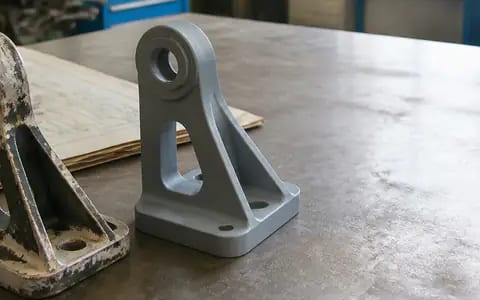
Most of the process listed by the feature are tightly controlled. The chemistries listed in the feature remain subject to strict regulatory control. Cadmium is very heavily controlled. For new designs, which are not tied by legacy data (as above), it is normally better to specify an alternative such as Zinc Nickel corrosion-protective plating on steel.
Substitution is easier at the design stage than at a later date when a part has been approved for production. Poeton’s breadth of processes means that an alternative finish is available should a designer wish to specify an alternative.
Where anodising can stand in
Anodising would be a good first choice to test against plated processes for new aluminium parts to meet wear and corrosion requirements. Anodizing is restricted to aluminium and other anodisable metals. Zinc Nickel would be typical for steel parts.
Choosing by whether the drawing is old or new
If a drawing is old then use the specified process, and the plant can carry the process. If the drawing is new then design to a requirement, i.e. steel = zinc nickel coating, aluminium = hard anodising.
Either way, it is sensible to check early on whether the selected coating has restricted chemistry and that a change is still allowed and not costly through being excluded from approval.