
Bringing a newborn home in New York City or anywhere in the state comes with its own set of challenges—limited counter space, busy schedules, and the constant pressure to keep everything clean. One of the most persistent tasks for new parents is ensuring feeding equipment is safe. While the FDA recommends sterilizing bottles before their first use, daily sanitization depends on your water source and cleaning habits. The good news is that you don’t need a lab-grade setup to get this done right. This guide breaks down the most efficient methods for sterilizing baby bottles in NY homes, considering the unique constraints of apartment living, hard water, and busy routines.
Key Takeaways
- Daily sterilization is not always necessary; washing with hot, soapy water is sufficient for healthy, full-term babies if your water supply is safe.
- Steam sterilizing (microwave or electric) is the fastest and most space-efficient method for New York apartments, taking as little as 5 minutes.
- Cold water sterilization using chemical tablets is a practical, portable solution that requires no electricity or heat.
- Boiling remains a reliable, zero-cost method, but it wears out bottles faster and requires careful timing to avoid melting plastic.
- If you are considering an appliance, look for a model that fits your counter space and has a drying function to prevent re-contamination from dampness.
Why Sterilization Matters (and When It Doesn’t)
Before you spend money on gadgets or extra time, it’s crucial to understand the “why” behind sterilization. A newborn’s immune system is immature, and they are susceptible to bacteria like Salmonella and E. coli, which can cause severe gastrointestinal distress. Sterilization kills these pathogens on surfaces that come into direct contact with milk or formula.
However, the American Academy of Pediatrics (AAP) notes that as long as you use hot, soapy water and a dedicated bottle brush, daily sterilization isn’t required for healthy babies if your household water is safe. In New York City, the tap water is generally considered safe and meets federal standards. In other parts of NY, especially on well water, you may want to sterilize daily until your baby is at least three months old. The key is to assess your specific water quality and your baby’s health status. If you are unsure, it is always safer to sterilize once a day until your pediatrician advises otherwise.
Comparing the Top Sterilization Methods
New York parents often have to choose between speed, counter space, and cost. Here is a direct comparison of the four most common methods to help you decide which fits your lifestyle.
| Method | Time Required | Space Needed | Pros | Cons |
|---|---|---|---|---|
| Boiling | 5–10 minutes | Stove top | Zero cost, uses basic equipment | Risk of melting plastic, short shelf-life of bottles, uses energy |
| Electric Steam Sterilizer | 6–8 minutes | Countertop (approx. 12″ x 12″) | Set-and-forget, large capacity, often includes drying cycle | Requires counter space, needs electricity, initial purchase cost |
| Microwave Steam Bags | 2–5 minutes | Microwave | Very fast, portable, stores flat | Smaller capacity, requires a microwave, bags need replacing |
| Cold Water Tablets | 30 minutes (soak) | Large bowl or tub | No heat, no electricity, great for travel | Requires chemical solution, longer wait time, needs rinsing with sterile water |
How to Steam Sterilize in Small Kitchens
Steam sterilization is arguably the most efficient method for NY homes because it uses high temperatures (above 212°F) to kill bacteria without chemicals. It is fast and requires minimal supervision once started.
Using a Microwave Steam Bag
This is the ultimate space-saver. You can fit a microwave bag in a drawer when not in use. To use it, add about 4 ounces of water to the bag, place the disassembled bottles inside, and microwave for 3–5 minutes. The steam generated inside the bag sterilizes the contents. Once done, let the bag cool for a few minutes before removing the bottles. These bags are reusable—typically up to 20 times—but you must track usage and replace them when they show signs of wear.
Using an Electric Sterilizer
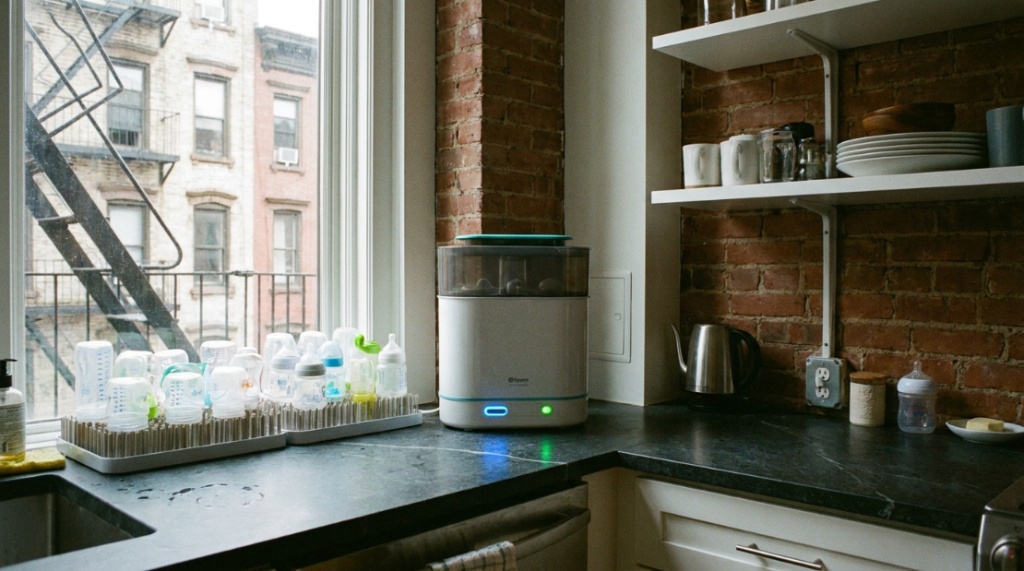
If you have a bit more counter space, an electric sterilizer is a “set and forget” option. You add water to a reservoir, load the bottles upside down, and press a button. The machine heats the water to create steam, which circulates and kills germs. Many models also have a drying cycle, which is a significant advantage. In a humid city like New York, air-drying can take a long time, and leaving bottles wet can lead to mold or mildew growth. A drying cycle eliminates this risk by using filtered air to dry the bottles inside the machine, keeping them sterile until you need them. For those looking to upgrade their routine, you can sterilize baby bottles NY parents trust with a dedicated washer that combines washing and sterilizing, which we will discuss later.
The Boiling Method: A Cost-Effective Fallback
Boiling is the most traditional method and requires no special equipment other than a large pot. It is an excellent fallback if your sterilizer breaks or if you are visiting a home without modern appliances.
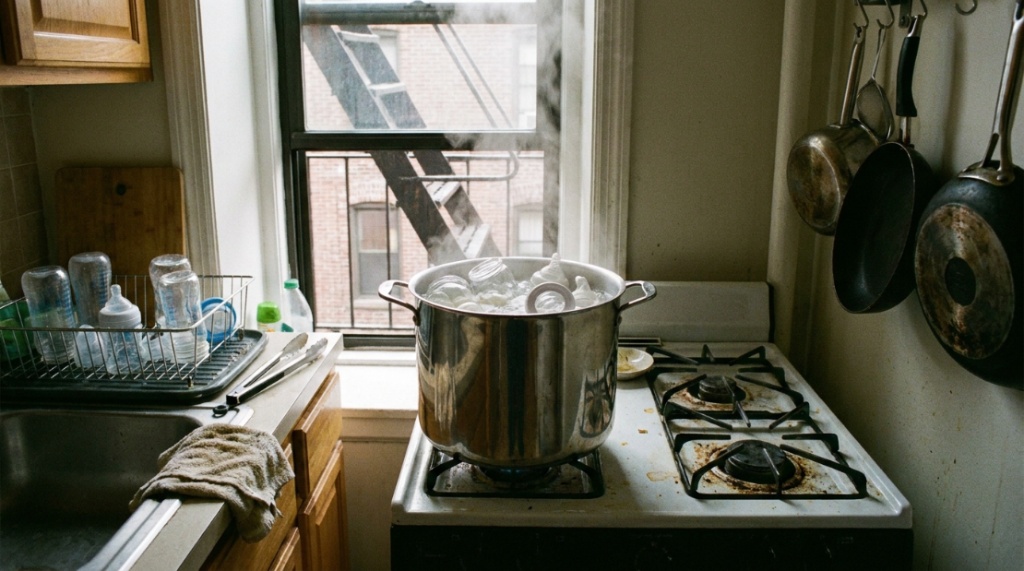
To do it correctly, ensure the bottles, nipples, and rings are fully submerged in water. Bring the water to a rolling boil and let it boil for at least 5 minutes (some experts recommend 10). Be cautious—if you are using plastic bottles, they can melt or warp if they touch the bottom of the pot. Use a pot dedicated solely to bottle sterilization to avoid chemical residue from cooking. After boiling, use tongs to remove the items and place them on a clean, dry towel. The downside is that bottles wear out faster with repeated boiling, and you must use them immediately or store them in a sterile container to prevent re-contamination.
Cold Water Sterilization: The Portable Option
Cold water sterilization is often overlooked but is incredibly useful for New York families who travel or who have limited access to a stove or microwave. This method uses a chemical solution (usually chlorine-based tablets) dissolved in water. You submerge the bottles in the solution for at least 30 minutes. The solution kills bacteria without heat.
This is the only method that requires you to rinse the bottles with cooled boiled water before use, as the chemical taste can linger. It is also the slowest method, so it is not ideal for daily use when you need a bottle quickly. However, it is perfect for day trips, camping, or situations where you cannot guarantee a clean water source for washing.
Choosing the Right Sterilizer for Your NY Apartment
If you decide to purchase a sterilizer, you need to consider more than just the price tag. New York apartments often have limited electrical outlets and counter space. Here are the decision criteria that matter most.
Capacity and Size
How many bottles do you go through in a day? If you are formula feeding, you might need to sterilize 6–8 bottles at a time. If you are mostly breastfeeding and only use bottles occasionally, a smaller microwave bag might suffice. Measure your counter space before buying an electric model. A unit that holds 6 bottles is usually about the size of a coffee maker. for budget-conscious parents setting up a nursery, check out these smart tips for buying baby gear without overspending in 2026 to save money on essentials.
Drying Functionality
As mentioned, moisture is the enemy. In a city apartment, leaving bottles to air-dry on a rack can take hours. A sterilizer with a built-in dryer uses HEPA filters to circulate hot air, ensuring bottles are completely dry and ready to use. This is a feature worth paying extra for, as it reduces the risk of bacterial growth from standing water.
Ease of Cleaning
Sterilizers themselves need to be cleaned. Look for models with a simple, flat heating plate that is easy to wipe down. Models with complex nooks and crannies can develop scale buildup (especially with NYC’s hard water), which can be difficult to remove and may harbor bacteria.
Common Mistakes to Avoid
Even with the best intentions, parents often make errors that compromise the sterilization process. Here are the most common pitfalls and how to avoid them.
- Not disassembling bottles: Steam and boiling water cannot reach the inside of the nipple if it is screwed onto the ring. Always take the bottle apart completely.
- Re-contaminating with wet hands: After sterilizing, your hands are the biggest risk. Wash your hands thoroughly before removing bottles from the sterilizer. Use tongs if possible.
- Storing bottles wet: If you sterilize bottles and leave them in the machine overnight, they may become damp. If the sterilizer doesn’t have a drying cycle, remove the bottles and assemble them immediately to keep the inside of the nipple clean.
- Ignoring water quality: If you use a microwave bag, the water you put inside should be safe to drink. If you are on well water, use bottled or filtered water to prevent mineral deposits on the bottles.
- Using damaged bottles: Sterilization does not repair cracks. If a bottle has a crack or a nipple has a tear, bacteria can hide there. Discard damaged items immediately.
Frequently Asked Questions
How long do sterilized bottles stay sterile?
If you leave bottles in a closed sterilizer with the lid on, they can remain sterile for up to 24 hours. Once you open the lid and touch the bottles, they are no longer sterile. If you remove them and assemble them with clean hands, they are safe to use for the next feeding, but you should not store them assembled for long periods.
Can I sterilize bottles in the dishwasher?
Yes, but it is not the most reliable method. A dishwasher with a “sanitize” cycle that reaches 150°F or higher can effectively sterilize bottles. However, the heat can damage plastic bottles over time. It is better to use this method for glass bottles or as a secondary wash, followed by steam sterilization for the nipples.
Is it safe to use UV sterilizers?
UV sterilizers are safe and effective. They use ultraviolet light to destroy the DNA of bacteria and viruses. They are popular because they are quiet and don’t use heat, so they won’t damage plastic. However, they only sterilize the surfaces that are directly exposed to the light, so bottles must be placed correctly to ensure all surfaces are hit.
Do I need to sterilize bottles if I use a bottle washer?
Many modern bottle washers include a steam sterilization cycle. If your washer has this function and you use it, you do not need to sterilize separately. If you are using a standard dishwasher without a sanitize cycle, you should still sterilize the bottles afterward.
When can I stop sterilizing baby bottles?
Most pediatricians agree that you can stop sterilizing bottles once your baby is over 3 months old and their immune system has strengthened. At this point, washing bottles in hot, soapy water or in the dishwasher is sufficient. If your baby was premature or has a weakened immune system, consult your pediatrician for specific guidance.
Conclusion
Sterilizing baby bottles in a New York home doesn’t have to be a stressful chore. The most efficient method depends on your available space, your schedule, and your budget. For most families, a microwave steam bag or an electric sterilizer with a drying function offers the best balance of speed and convenience. Boiling is a reliable backup, and cold water tablets are excellent for travel. Remember that the goal is to kill harmful bacteria, but you don’t need to live in a sterile bubble. Once your baby reaches three months old, a thorough wash with hot, soapy water is generally all you need. Choose the method that fits your daily rhythm, and you’ll keep your little one safe without sacrificing your sanity.