

If you’re chasing waves along the Outer Banks or hitting the sandbars at Wrightsville Beach, protecting your skimboard is just as important as the board itself. The North Carolina coast offers incredible skimboarding conditions, but the salty air, UV exposure, and constant car-to-sand transport can take a toll on your equipment. However, finding the right protection in the Tar Heel State isn’t just about grabbing any generic bag off the shelf. You need a bag that matches your board’s dimensions, your travel habits, and the specific conditions you face on NC beaches. This guide breaks down everything you need to consider so you can confidently select the best skimboard bag in NC.
Key Takeaways
- Skimboard bags are primarily for transport and storage protection, not for use while riding; they guard against dings, UV rays, and heat damage.
- Choosing the correct size and shape (teardrop vs. rounded tail) is critical because an ill-fitting bag offers poor protection and allows the board to shift during transit.
- Material quality matters significantly; look for thick neoprene or padded nylon with reinforced stitching to handle the rigors of beach travel.
- Carrying comfort is a practical priority; consider padded shoulder straps or backpack-style harnesses to make long walks across NC’s expansive beaches easier.
- Local factors like humid heat, saltwater exposure, and frequent travel in the car with other gear should heavily influence your choice between a light sleeve and a heavy-duty travel bag.
Why Your Skimboard Needs a Dedicated Bag
Skimboards look simple, but the materials they are made from—whether high-density foam wrapped in fiberglass or solid wood—are actually quite susceptible to environmental stress. Leaving a skimboard loose in the trunk of your car while you drive to Atlantic Beach is a recipe for disaster. The board slides around, knocking into bike racks, chairs, or coolers, leading to pressure dings and cracked rails. Furthermore, the intense North Carolina summer sun can bake the fiberglass, causing it to become brittle, while heat trapped in a car trunk can even cause the foam core to delaminate. A quality bag acts as a barrier, absorbing shock during transit and shielding the board from UV rays when you are walking across the hot sand.
It is also worth noting that the best skimboard bags on the market offer more than just scratch protection; they often include insulated thermal layers. This thermal protection is not just marketing fluff—it slows down the temperature transfer from a scorching asphalt parking lot to your board. A bag is an investment in longevity. When you compare the cost of a decent bag to the cost of repairing a delaminated board or replacing a shattered nose, the math is simple. While searching for the best skimboard bag in NC, you are fundamentally looking for a product that extends the life of your gear, saving you money in the long run by preventing premature wear.
Critical Factors to Consider Before Buying
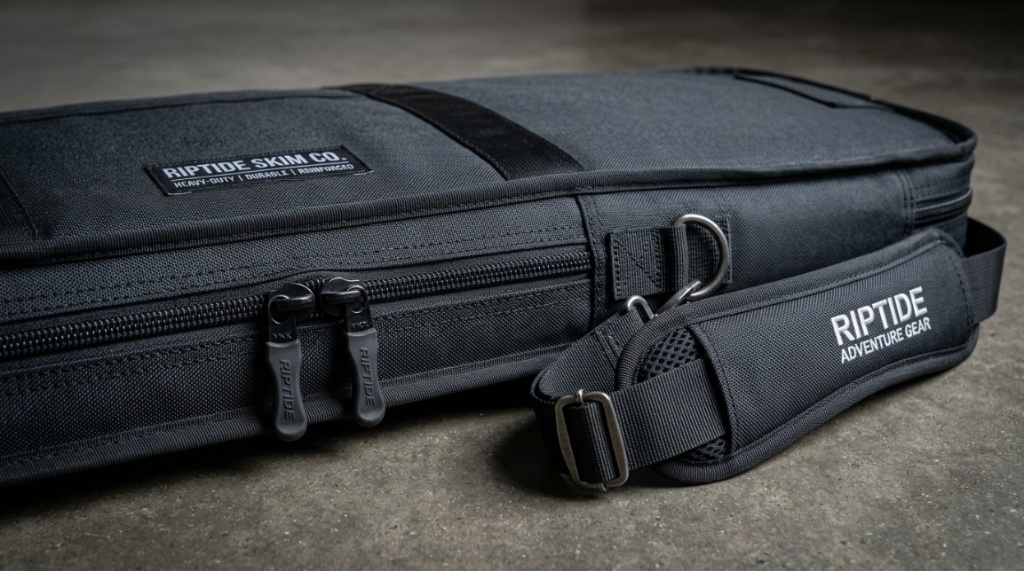
Before you click “add to cart,” you need to evaluate several technical aspects of the bag. Not all bags are created equal, and the one that works for a travel bag designed for airline flights might be overkill for a quick session at the local pier. Here are the non-negotiable factors you need to evaluate.
Size, Length, and Board Profile
The most common mistake beginner skimboarders make is buying a bag that is the wrong size. Skimboards range significantly in length, typically from 48 inches for kids up to 56 inches or more for advanced riders and taller adults. A bag that is too short forces the nose or tail to press against the seam, stretching the material and eventually ripping it. Conversely, a bag that is too long allows the board to slide back and forth, concentrating friction on the tail.
You must also consider the tail shape of your board. Most skimboards have either a rounded pin-tail or a square tail. Many high-quality bags are designed with a fitted “teardrop” or “squared” end to match these specific profiles. If you put a rounded tail board into a square-tail bag, you will have excess material bunching up, which defeats the purpose of a snug fit. Measure your board from nose to tail along the centerline and check the manufacturer’s specific size chart—do not assume a “55-inch bag” will fit your specific 55-inch board if the tail shape is different.
Material and Padding Thickness
The distinction between a “day bag” and a “travel bag” comes down to the thickness and type of padding. Day bags are usually made of a light nylon or polyester material and are sometimes neoprene-lined. They offer minimal protection against sharp impacts but are excellent for keeping dust and sand off the board. Travel bags, on the other hand, feature thick foam padding—often 5mm or 10mm thick—sandwiched between an outer abrasion-resistant shell and a soft interior fleece lining.
For NC, where you may be driving on rough rural roads to get to secluded spots like Portsmouth Island, you likely want a travel bag with at least 5mm padding. This thickness absorbs the vibration and shock from the vehicle and protects the board from impacts if you accidentally drop it or if other gear is thrown on top of it. Always check the denier (D) rating of the outer fabric; a higher denier (like 600D or 840D) indicates a tougher, more tear-resistant weave that can withstand being dragged across concrete, Planning your Pacific Northwest surf session next? Make sure you gear up right and Choose the Best Skimboard in Oregon 2026.
Closure Systems: Zippers vs. Straps
Take a close look at how the bag closes. The simplest and cheapest bags use a compression strap over the nose and a hook-and-loop (Velcro) opening at the tail. These are fine for protection but leave the board exposed to dust. Fully enclosed bags with full-length zippers offer the best protection from sand and water. However, nylon zippers are prone to jamming if sand gets caught in the teeth.
Look for bags that feature heavy-duty zippers, ideally with a zipper guard or a flap that covers the zipper track. Some high-end bags now use waterproof YKK zippers, which prevent the zipper from corroding in the salty air. If you often travel with wet boards, ensure the bag has ventilation holes or mesh panels; otherwise, you will trap moisture inside, leading to mildew growth and a musty smell that is hard to remove.
Matching the Bag to Your Riding Style and Travel Needs
Your specific use case in North Carolina should dictate your purchase. The needs of a local rider who walks three blocks to the beach are vastly different from those of a competitor traveling to a skimboarding event in Virginia. Let’s break down the specific scenarios.
Local Session Bags: Lightweight and Convenient
If you ride almost daily at locations like Emerald Isle or Ocean Isle Beach, you need a bag that is lightweight and easy to handle. In this scenario, a heavy travel bag becomes a burden. A lightweight “day bag” with a single shoulder strap is often ideal. These bags are usually made of a water-resistant synthetic fabric that easily repels sand and water. They are easy to fold up and stash in your car when not in use.
However, you should still ensure the bag has a rubber or non-slip coating on the bottom. This texture allows you to set the board down on wet sand without it sliding away or getting soaked. The primary goal here is convenience and basic scuff protection, not crash protection. You are protecting the board from your own car and the environment, not from being dropped off an SUV roof.
Travel Bags: Maximum Protection for Expeditions
For those planning road trips to Florida or flying to international competitions, a hard-case or padded travel bag is a necessity. These bags often feature a central grab handle and a backpack-style harness for easier transport. The extra internal volume also allows you to pack a wetsuit, wax, or fins around the board, provided the packing material doesn’t put pressure on the deck. In NC, if you are crossing the ferry to Ocracoke or heading down the Cape Hatteras National Seashore, the extra padding is a godsend for the bumpy, unpaved access roads. There is a tradeoff, though: these bags are bulky. They do not fold flat for storage, and they are heavy even when empty, which can be annoying if your car is already packed with fishing gear and beach chairs.
Comfort and Portability: Don\’t Overlook the Carry System
When you are hiking down the beach access path at Nags Head, the ergonomics of the bag become immediate. A thin, unpadded strap will dig into your shoulder as soon as the board starts swinging. There are generally three types of carry systems to consider:
- Single Padded Shoulder Strap: The most common and efficient for short distances. It keeps the board vertical against your side and allows you to hold a cooler in the other hand.
- Backpack Straps: Found on larger travel bags. These offer hands-free carrying and are much better for your posture on long walks. However, they can be hot and sweaty in the summer heat.
- Side/Hybrid Straps: Some bags offer a detachable strap that can be positioned either over the shoulder or held by hand. This is a versatile option if you want flexibility.
Pay attention to the location of the carry handle relative to the board\’s balance point. A bag with a handle positioned for a 53-inch board will feel front-heavy on a 55-inch board. Look for bags where the handle is padded and attached to a reinforced “wrap” that goes around the entire girth of the bag, rather than just tiny loops stitched to the fabric. This ensures that the weight is distributed across the bag\’s body, reducing the risk of the handle ripping off mid-walk.
Common Mistakes Skimmers Make
Understanding what not to do is just as valuable as knowing what to look for. Here are the most frequent purchasing errors riders make when buying bags online or in surf shops:
- Buying a Surfboard Bag: Surfboard bags are elongated and not shaped to hold the thicker, shorter profile of a skimboard. Your board will slide around and likely punch holes in the bag\’s seams.
- Ignoring the Exterior Pockets: While pockets are useful, external pockets are a structural weakness. They add stitching and seams that can catch on car door handles and rip. Prioritize the structural integrity of the bag over storage options.
- Forgetting to Dry the Board: Even with the best bag, never store a wet board inside. The trapped moisture can cause the fiberglass to become brittle and the wooden cores of traditional boards to swell. A bag protects against physical impacts, but it is not a drying rack.
- Choosing Style Over Substance: Fancy camo or neon prints look cool, but they don’t matter if the bag has 2mm of padding. Always feel the bag in the store if possible. If it feels flimsy, it is flimsy.
Maintenance Tips for Longevity
To get the most out of your purchase, you must maintain the bag. This is especially true in the salty, humid climate of the Carolina coast. Rinse the bag with fresh water after every few sessions to remove salt crystals. Salt is abrasive; it will grind down the zippers and fade the fabric over time. Allow the bag to dry completely before folding it up for storage to prevent mildew.
If the bag has neoprene sections, you can treat them with a neoprene shampoo to keep the material flexible and stretchy. Do not machine wash your skimboard bag. The agitator in a washing machine will crush the protective foam padding, ruining its ability to absorb impacts. Instead, scrub it gently with a soft brush and mild soap, then hang it off the line to dry.
Finally, consider the closure mechanism. If you have a bag with a velcro closure, keep the hook side away from the fiberglass material of your board when storing it. The hooks can catch on the rails and leave tiny scratches if the board is pushed in aggressively.
Frequently Asked Questions
Can I use a skimboard bag for airline travel?
Yes, but you must be careful. Most domestic airlines allow skimboards as checked baggage, but they are often classified as “oversized luggage,” incurring additional fees. A soft, 10mm padded bag may not be enough for airline handling. Consider a rigid travel case or a bag that is clearly within the airline\’s dimension limits to avoid damage and extra costs.
Should I buy a bigger bag so my skimboard can fit with a wetsuit?
It is generally not a good idea. A bag that has a lot of extra space allows the board to smash around inside, causing pressure dings. If you need to store a wetsuit, choose a bag that is exactly the right size for the board and store the wetsuit separately in your luggage.
What is the difference between a day bag and a travel bag?
A day bag is lightweight, usually 2mm-3mm thick, and designed for simple scuff protection and UV blocking for short car trips. A travel bag is heavily padded (5mm-10mm), has reinforced handles, and is designed to protect against significant impact and crushing forces during long trips or airline travel.
How do I measure my skimboard for a bag?
Measure the length of the board from the tip of the nose to the center of the tail. Then, measure the width at the widest point. Compare these measurements to the bag\’s internal dimensions listed by the manufacturer. You want the bag to be slightly larger—about one inch longer—than the board, but never smaller.
Are waterproof bags necessary for skimboarding?
Not entirely. Waterproof bags offer “splash resistance,” but they can trap moisture inside, leading to mold. Bags with water-resistant coatings and ventilation holes are often better because they allow wet boards to dry while protecting them from the elements.
Conclusion
Selecting the right skimboard bag is a balance of size, material, and intended use. Whether you are a weekend warrior at the Outer Banks looking for a lightweight day sleeve, or you are a competitive rider needing a rugged travel case for road trips, the fundamental rule remains the same: the bag must be built to protect your specific investment and make your life easier. Don’t cut corners on padding or zipper quality, and always ensure the bag fits your board’s profile snugly. By avoiding the sizing pitfalls and maintenance mistakes covered above, you can ensure your skimboard stays in top condition for many seasons of shredding the Carolina waves. Take your time, check the specifications, and choose a bag that matches the quality of your riding.